*Kyla Krohn
“More than 131 million people—66 percent of all adults in the United States—use prescription drugs.”1 For many, access to those medications is vital.2 Legal scholars, economists, and public health advocates have long analyzed and debated the role intellectual property regulations have played in hindering the availability of more affordable generic pharmaceuticals to these millions of people. So far, these discussions have primarily focused on how patents inhibit the availability of more cost-effective medications for a wider population. But patents are not the only type of intellectual property that influences access to medications. Over the past decade, legal scholars and lawmakers have increasingly scrutinized the potential impacts of trademark law on public health.
The regulation of trademarks serves two purposes: to minimize consumer confusion and protect the goodwill inherent to trademarks and their owners.3 At the primary level, a trademark is a distinctive mark in the form of name, packaging, label, device, or another physical feature that indicates a particular product’s origin and distinguishes it from others.4 In doing so, the trademark advertises the product, enables consumers to differentiate it from the alternate goods available in the market, and reduces the search cost.5
Part of the power of the trademark rests in its lifespan. A patent only lasts for twenty years,6 whereas a trademark can last forever, so long as it is being used.7 While a drug is patented, a company will establish a drug’s brand name. After the patent expires, a generic version typically enters the market so that a prescription drug having the same active ingredient is available to consumers. Pharmaceutical companies often use trademarks to differentiate a branded drug from a chemically equivalent generic drug. For example, if you visit your local Target, you will see a familiar bottle of TYLENOL™, with one hundred caplets of five hundred milligrams each, on sale for $10.99.8 The bottle next to it is labeled “acetaminophen caplets,” and likewise contains one hundred five hundred-milligram caplets, but for a price of $1.99.9 The pills in each bottle are biochemically equivalent.10 Despite having the same dosage and effect, the TYLENOL™ is over five times more expensive than the generic option. In many cases, branded drug producers also manufacture the generic counterparts.11
Even though there is an increase of more affordable generic options entering the market after a patent on a drug expires, there is scarce evidence that prices of brand-name drugs are decreasing over time.12 In fact, several researchers have found that drug prices tend to increase when generics are introduced to the market.13 The influence of advertising and promotion of branded drugs has generally led consumers to believe that trademarked medications are distinct from one another and superior to generic drugs.14 In effect, pharmaceutical trademarks confuse consumers into mistakenly believing that brand-name products are actually different from generics.15 Instead of clarifying the source of the medication for the consumer to prevent confusion, pharmaceutical companies’ use of trademarks creates distinction where it doesn’t exist. This façade is known as artificial product differentiation.
The function of pharmaceutical trademarks has shifted from preventing consumer confusion and market inefficiency to creating it—from empowering consumers to make informed purchase decisions to increasing profits through artificial product differentiation. Intellectual property scholar Barton Beebe introduced the framework for artificial differentiation.16 He observed that whereas source distinctiveness indicates the origin of a product, differential distinctiveness refers to an informational effect that causes consumers to perceive a particular trademark-protected good as different from the others.17 A trademark not only stands for a product’s origin, but it also sets it apart. It is known that advertising is a factor that contributes to product differentiation and, in turn, higher prices.18 This distinction, although seemingly small, has huge effects on consumer behavior, particularly in the pharmaceutical industry.
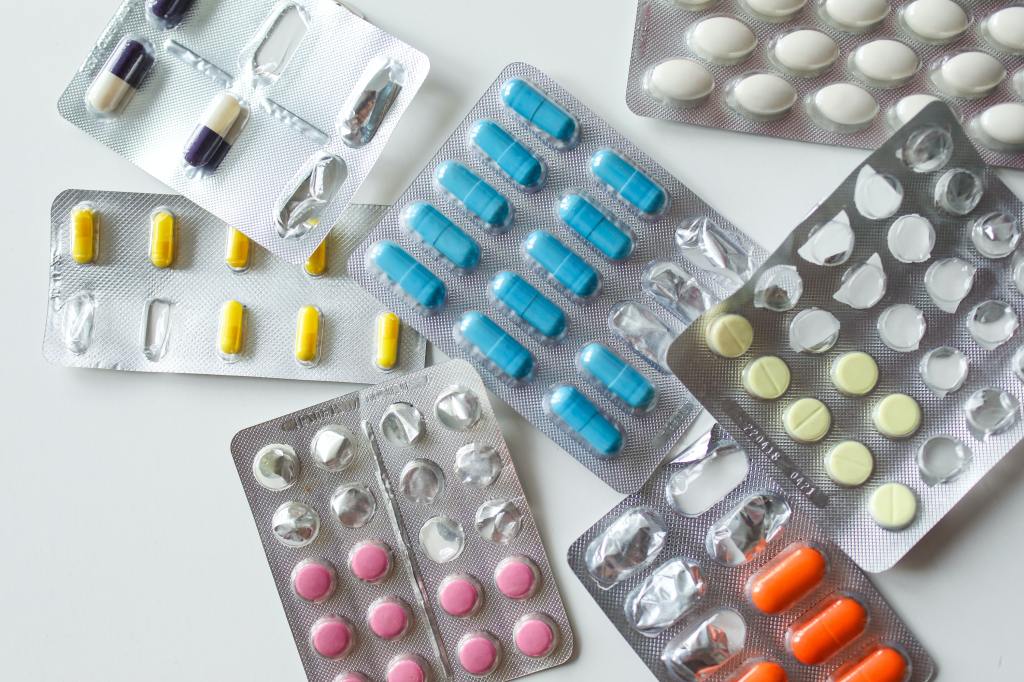
This issue is receiving increasing attention from scholars. Roger Feldman and Felix Lobo found that in the framework of the pharmaceutical industry, the mere availability of trademarks for drug names may not benefit consumers.19 They posit that letting companies use international nonproprietary names (INN), or generic names, would minimize the search costs and product differentiation and lead to unquestionable consumer benefits.20 Scholar Jeremy Greene highlighted the negative implications of the practice of using trade dress that visibly differentiates between the branded and generic drugs, thereby raising doubts in the mind of the patients about the quality of generic drugs.21 He suggested the reduction of artificial product differentiation by introducing a consistent and organized system of pill appearance; he speculates that this will have the additional benefit of reducing medication errors.22 Following a similar argument, Hannah Brennan argued that policymakers should eliminate pharmaceutical trademarks and trade dress and instead require manufacturers to label drugs with their generic names and a mark identifying the manufacturer.23 Such a labeling system would clarify the equivalence of brands and generics while still allowing consumers to identify a drug’s source.24
Despite the findings of and potential solutions proposed by many scholars, combined with an increase in pharmaceutical companies joining the race to develop even more differentiated drug products, there has been resistance to change in the system. It is time for collaboration between multiple agencies, including the Federal Drug Administration and the United States Patent and Trademark Office, to create a new system that is more aligned with the fundamental purpose of trademark law: to help consumers. Although the underlying intent of generics is to provide better access to medicine, trademarks have allowed an industry keen on increasing profits to restrict the entry of cost-effective generic drugs to the market.
*Kyla Krohn, University of St. Thomas Law Journal Digital Communications Editor
1 Emily Ihara, Prescription Drugs, Health Pol’y Inst., https://hpi.georgetown.edu/rxdrugs/ (last visited Sept. 7, 2023).
2 Rebecca Farley, Do Pharmaceutical Companies Spend More on Marketing than Research and Development?, Pharmacy Checker, https://www.pharmacychecker.com/askpc/pharmamarketing-research-development/# (last visited Sept. 7, 2023).
3 1 J. Thomas McCarthy, McCarthy on Trademarks and Unfair Competition § 2:2 (5th ed. 2023).
4 Id. § 3:1.
5 Kuhu Tiwari & Niharika Sahoo Bhattacharya, Revisiting the Justification of Trademark Protection for Single Drug Compositions: A Critical Analysis from a Regulatory Perspective, 55 Akron L. Rev. 359, 362–63 (2021).
6 35 U.S.C. § 154.
7 See 15 U.S.C § 1059.
8 Tylenol Extra Strength Pain Reliever and Fever Reducer Caplets – Acetaminophen, Target, https://www.target.com/p/tylenol-extra-strength-pain-reliever-and-fever-reducer-caplets-acetaminophen-100ct/-/A-14827711?preselect=14827711#lnk=sametab (last visited Sept. 7, 2023).
9 Acetaminophen Extra Strength Pain Reliever & Fever Reducer Caplets – up & up™, Target, https://www.target.com/p/acetaminophen-extra-strength-pain-reliever-fever-reducer-caplets-up-up/-/A-51217955?preselect=11369394#lnk=sametab (last visited Sept. 7, 2023).
10 See What Is Acetaminophen?, Tylenol, https://www.tylenol.com/safety-dosing/usage/what-is-acetaminophen (last visited Sept. 7, 2023).
11 Natasha Singer, Drug Firms Apply Brand to Generics, N.Y. Times (Feb. 15, 2010), https://www.nytimes.com/2010/02/16/business/16generic.html.
12 See Richard E. Caves, Michael D. Whinston, & Mark A. Hurwitz, Patent Expiration, Entry, and Competition in the U.S. Pharmaceutical Industry, Brookings Papers on Econ. Activity, Microecon. 1, 60 (1991).
13 See, e.g., Jayanta Bhattacharya & William B. Vogt, A Simple Model of Pharmaceutical Price Dynamics, 46 J. L. & Econ. 599, 601 (2003) (referencing Richard E. Caves, Michael D. Whinston, & Mark A. Hurwitz, Patent Expiration, Entry, and Competition in the U.S. Pharmaceutical Industry, Brookings Papers on Econ. Activity, Microecon. 1 (1991)); Henry G. Grabowski & John M. Vernon, Brand Loyalty, Entry, and Price Competition in Pharmaceuticals After the 1984 Drug Act, 35 J.L. & Econ. 331 (1992); Richard G. Frank & David S. Salkever, Generic Entry and the Pricing of Pharmaceuticals, 6 J. Econ. & Mgmt. Strategy 75 (1997).
14 Hannah Brennan, The Cost of Confusion: The Paradox of Trademarked Pharmaceuticals, 22 Mich. Telecomm. & Tech. L. Rev. 1, 32 (2015).
15 Id.
16 See Barton Beebe, Search and Persuasion in Trademark Law, 103 Mich. L. Rev. 2020, 2030 (2005).
17 Id.
18 See id. at 2042; Robert Dorfman & Peter O. Steiner, Optimal Advertising and Optimal Quality, 44 Am. Econ. Rev. 826, 836 (1954).
19 Roger Feldman & Felix Lobo, Competition in Prescription Drug Markets: The Roles of Trademarks, Advertising, and Generic Names, 14 Eur. J. Health & Econ. 667, 674 (2013).
20 Id.
21 Jeremy A. Greene, The Materiality of the Brand: Form, Function, and the Pharmaceutical Trademark, 29(2) Hist. & Tech., 210, 226 (2013).
22 Id. at 219.
23 Brennan, supra note 14, at 4.
24 Brennan, supra note 14, at 20.
 University of St. Thomas Law Journal
Leave a comment