*Zekriah Chaudhry
Over the past year, public access to artificial intelligence (AI) technology has exploded.1 AI tools are finding use in finance, retail, marketing, and other industries;2 the legal field is no exception.3 The infusion of AI into law is coming faster––and running deeper––than perhaps some lawyers and law students anticipated. Due in part to its remarkable efficiency, lawyers may soon be expected, and perhaps required, to have a basic understanding of how to use these tools.4 Even if learning highly technical skills, such as complex coding, is not ultimately required for the simple use of AI as companies continue to increase the user accessibility of these tools, students can begin learning AI interfaces and their potential applications to legal work and school.
Many law students have not yet started using AI in their studies or work.5 In its current and evolving form, students could make use of AI to promote efficiency and refine their output. For those still looking to begin incorporating AI into their school and work life, this post focuses on basic ideas of ways that students can start moving forward with AI and using it to streamline everyday tasks.
Legal Writing
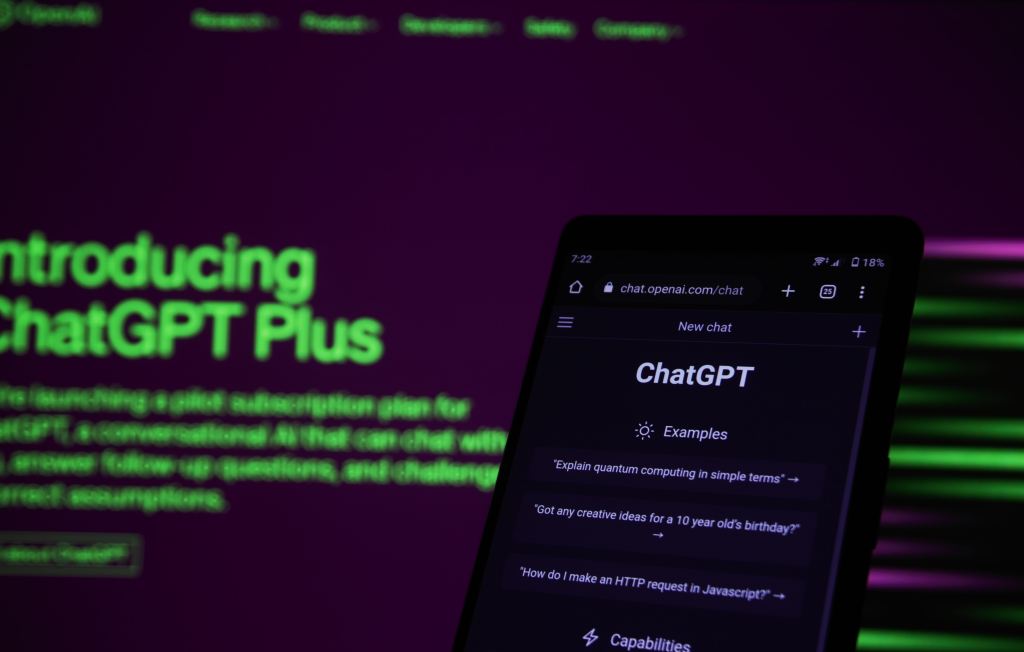
One of the easiest ways to get started with AI is by using chatbots to assist your writing. For instance, the free ChatGPT bot on OpenAI’s website6 can offer writing feedback and even provide rephrased or completely rewritten content. However, these AI writing tools, in their current form, have limitations that law students should understand. For example, the tools are known to occasionally produce misleading or inaccurate information and have led to scandal for lawyers who rely on them too heavily.7
At this point, ChatGPT is better for helping users phrase things that they have not yet been able to formulate and suggesting ways that they can clarify their writing. That is, users are not as likely to have success relying on ChatGPT for writing an entire memorandum. Instead, it is better served to help enhance what they have already written or speed up the writing process. Alternatives include Jasper8 and YouChat,9 the latter of which sources from and cites to Google.
Organizing Notes
Effective note organization is important to law students, and it is often overwhelming. Between class notes, outlines, and case briefs, students may be wading through hundreds of pages of notes by the time finals roll around. In addition, note taking can be exhausting. Using a combination of auto-transcription tools—like Otter.ai—with large language models (LLMs)—like ChatGPT—can help law students capture notes and turn them into usable content faster.
With prompt engineering, ChatGPT can pare down and summarize content, including your own notes. Organizing large blocks of text into sections and streamlining the content is useful for traditional written items, and when coupled with a tool like Otter.ai, AI can even help students revisit lectures and video content.
For the time being, classroom policies might restrict the use of a recording AI like Otter.ai. However, if permitted, the tool can serve as a valuable record keeping device that turns lectures into written form. Otherwise, AI platforms like SaneBox10 can help students manage swaths of work and school emails.
Legal Research
Early into law school, students are expected to use databases like Westlaw, Lexis, and Bloomberg for legal research. As a result of these digital tools, legal research is already far more efficient than in previous generations.11 With AI, the expansion is continuing.12
In August of 2023, Thomson Reuters announced its purchase of AI startup Casetext.13 Casetext, which is now available on various pricing plans, uses its flagship product CoCounsel to integrate AI capabilities into legal research.14 Casetext claims to be in use by over 10,000 law firms.15
CoCounsel can be used to streamline several tasks that law students might encounter in clinical work, classes heavy on legal writing, and in work environments. The technology’s capabilities include deposition preparations, which operates through users inputting basic information about the case to receive a quick deposition outline that breaks down key topics and formulates questions.16 CoCounsel is also capable of scanning and analyzing documents for law firms’ contract databases.17
Summarizing Information
Creating briefs and understanding deep nuances in complex cases is also made easier through AI Tools like CoCounsel that are geared toward parsing through intricate legal documents like contracts or opinions.18 ChatGPT can also help students who are drowning in case law, for example, by quickly breaking down the facts, procedural history, issues, and holdings.
Going Forward
As AI continues to rapidly evolve, embracing these tools will help students prepare for a future legal landscape where AI could be indispensable. The relationship between law and AI promises a more dynamic and efficient approach to legal practice and research. While AI today has limitations to its use, shown, for example, by high-performing law students at the University of Minnesota performing worse on their final exams when given access to AI,19 law students who become familiar with the technology now are positioning themselves to be at the forefront of legal technology.
*Zekriah Chaudry, J.D. Candidate, University of St. Thomas School of Law Class of 2025 (Associate Editor)
- Ina Fried, Lessons from the AI Whirlwind, Axios (Sept. 28, 2023), https://www.axios.com/2023/09/28/ai-code-conference-lessons. ↩︎
- Joanie Moretti, 5 Industries That Will Be The Most Heavily Impacted By AI, Cal. Bus. J., https://calbizjournal.com/5-industries-that-will-be-the-most-heavily-impacted-by-ai/ (last visited Sept. 28, 2023). ↩︎
- John Villasenor, How AI Will Revolutionize the Practice of Law, Brookings (Mar. 20, 2023), https://www.brookings.edu/articles/how-ai-will-revolutionize-the-practice-of-law/. ↩︎
- Mark L. Shope, Lawyer and Judicial Competency in the Era of Artificial Intelligence: Ethical Requirements for Documenting Datasets and Machine Learning Models, 34 Geo. J. L. Ethics 193 (2021). ↩︎
- Serena Wellen, Learning the Law with AI: Why Law School Students Are Tentative About Using Chat GPT, LawNext (June 2, 2023), https://directory.lawnext.com/library/learning-the-law-with-ai-why-law-school-students-are-tentative-about-using-chat-gpt/. ↩︎
- OpenAI, https://chat.openai.com/ (last visited Sept. 28, 2023). ↩︎
- Bob Van Voris, Phony ChatGPT Brief Leads to $5,000 Fine for NY Lawyers, Bloomberg Law (June 22, 2023, 2:21 PM), https://news.bloomberglaw.com/business-and-practice/chatgpt-phony-legal-filing-case-gets-lawyers-a-5-000-fine. ↩︎
- Jasper, https://www.jasper.ai/ (last visited Sept. 28, 2023). ↩︎
- You, https://about.you.com/youchat/ (last visited Sept. 28, 2023). ↩︎
- SaneBox, https://www.sanebox.com/ (last visited Sept. 28, 2023). ↩︎
- The Evolution of Legal Research, Thomson Reuters (Oct. 12, 2022), https://legal.thomsonreuters.com/blog/the-evolution-of-legal-research/. ↩︎
- Villasenor, supra note 3. ↩︎
- Thomson Reuters Completes Acquisition of Casetext, Inc., Thomson Rueters (Aug. 17, 2023), https://www.thomsonreuters.com/en/press-releases/2023/august/thomson-reuters-completes-acquisition-of-casetext-inc.html. ↩︎
- Villasenor, supra note 3. ↩︎
- Thomson Rueters, supra note 13. ↩︎
- Casetext, https://casetext.com/ (last visited Sept. 28, 2023). ↩︎
- Id. ↩︎
- Id. ↩︎
- Karen Sloan, These Law Students Got to Use AI on Final Exams. How’d They Do?, Reuters (Aug. 29, 2023), https://www.reuters.com/legal/transactional/these-law-students-got-use-ai-final-exams-howd-they-do-2023-08-29/. ↩︎
 University of St. Thomas Law Journal
Leave a comment