Mason Rademacher*
Overview:
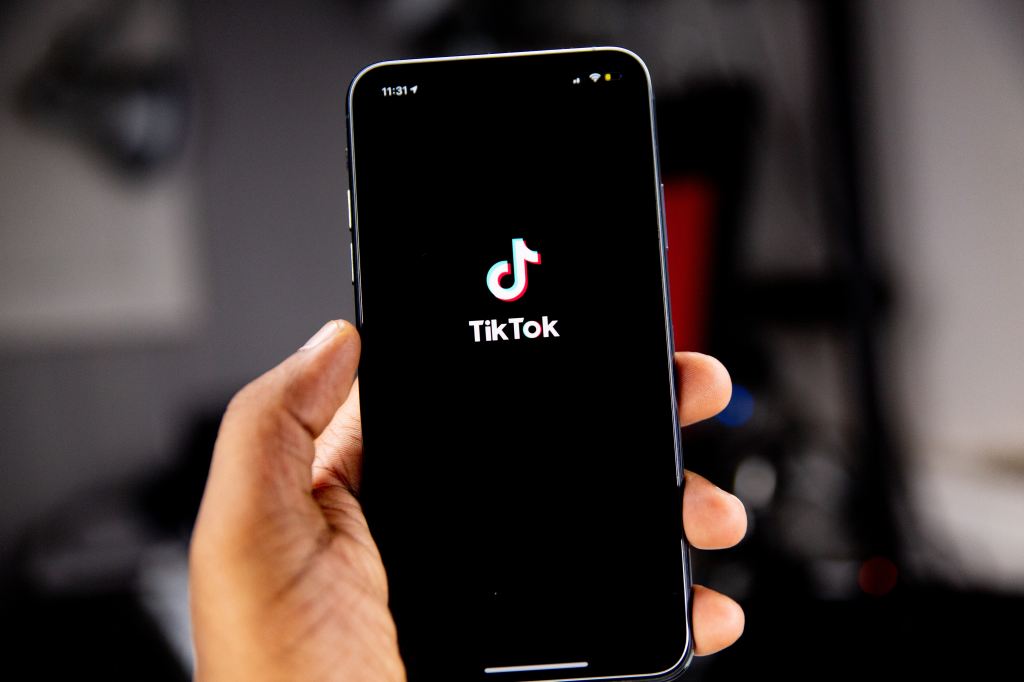
More than 150 million Americans use TikTok1 for an average of ninety minutes each day.2 Even with so many Americans using the app, national security experts and politicians on both sides of the aisle have called for banning TikTok, citing to national security concerns.3 The concern lies with the fact that TikTok, a wholly owned subsidiary of ByteDance Ltd., a Chinese technology firm, is subjected to all Chinese laws.4 Specifically, the politicians and national security experts cite to China’s national intelligence laws that require “any organization” to assist with state intelligence work and the worry that TikTok could be compelled to hand over all the data it has collected on Americans.5 Moreover, fears have been expressed that “TikTok could reveal the social ties between Americans–allowing China to map out who is connected to whom based on how people interact with each other on the app.”6 Furthermore, there are concerns that China could leverage its power over the company and influence the content users see to control public discourse on hot-button issues.7 Although TikTok officials assert they have never provided data to the Chinese government and would decline to do so if ever asked, these national security concerns continue to remain.8
Attempts to Ban TikTok:
Citing these national security concerns, President Trump issued an Executive Order aimed at either forcing TikTok to sell to an American company or face a ban.9 Although two district courts struck down President Trump’s attempt,10 President Biden has similarly signaled that unless TikTok is sold to an American company, he may also pursue banning the popular social media app.11 Under President Biden, the Committee on Foreign Investment in the United States (CFIUS), which is tasked with reviewing transactions that could affect national security, has been quietly pushing TikTok to sell to an American company.12
Not only has President Biden been active in taking measures to alleviate TikTok’s potential national security threat, but so has Congress by introducing legislation that would provide the administration with additional authority should it make another attempt to ban TikTok or take other actions to curb its use in the United States.13 For example, in February 2023, Representative Michael McCaul, Chairman of the House Foreign Affairs Committee, introduced the Deterring American’s Technological Adversaries (DATA) Act.14 Specifically, the DATA Act would empower the President to implement sanctions on any “foreign person who works with or uses software that is under the jurisdiction of [China].”15 Furthermore, the Act would require the President, within ninety days, to decide whether or not certain entities—mainly aimed at TikTok—would be subjected to sanctions.16 As of October 2023, the bill has passed out of the House Committee on Foreign Affairs but has yet to receive a full house vote.17
Similar legislation aimed at TikTok has been introduced in the Senate.18 In March 2023, Senator Mark Warner and other co-sponsors introduced the Restricting the Emergence of Security Threats that Risk Information and Communications Technology (RESTRICT) Act. If passed, it would provide power to the U.S. Secretary of Commerce to ban foreign technology companies, including most notably, TikTok.19 Similar to the DATA Act, the RESTRICT Act has yet to receive a full vote in the Senate.20
Recently, the state of Montana decided to take matters into its own hands, and in May 2023, a ban of TikTok was signed into law.21 The ban, absent court intervention, is set to take effect in January of 2024 and is aimed at prohibiting TikTok’s operation within the state.22 Violators could be subjected to fines up to $10,000 per day, which includes app stores that would permit users to continue to download and use the app.23
Constitutional Challenges:
These efforts to ban TikTok have not come without strong opposition. President Trump’s attempt to ban TikTok was struck down by two separate district courts.24 In Marland v. Trump and TikTok v. Trump, the judges found President Trump held insufficient power to implement such a ban.25 Moreover, the actions by President Biden and Congress have led at least sixteen public interest groups to issue warnings that any attempt to ban TikTok would be met with strong resistance and First Amendment challenges.26
Specifically, opponents of a TikTok ban argue that banning the app would “cut off the flow of information, art, and communication,” that many Americans use TikTok to “organize political action against an unconstitutional ban [of TikTok],” and that the First Amendment is designed to protect these kinds of speech.27 Other opponents argue that there is insufficient evidence to support the aforementioned national security concerns and overcoming a First Amendment challenge would require definitive proof of China engaging in nefarious conduct.28
Conversely, defenders of a potential TikTok ban attempt to shift the argument away from First Amendment analysis and instead claim a ban would be aimed at commercial transactions instead of speech.29 Recently, the Department of Justice argued that TikTok restrictions do not trigger a First Amendment analysis because any ban would be implemented to “regulate only economic transactions based on national-security concerns.”30
With the Montana TikTok ban set to take effect soon, its impact may provide us with an additional opportunity to see how courts may evaluate this issue. In response to Montana’s ban, TikTok filed a lawsuit in the Federal District Court of Montana seeking declaratory and injunctive relief to strike down the law as unconstitutional.31 In its complaint, TikTok alleges the statute should be struck down due to violations of the First Amendment and the Commerce Clause as well as on the grounds of Federal Preemption and the Bill of Attainder.32 It remains to be seen how the court will respond, but it’s clear that other states and the federal government will be watching for the outcome.
TikTok’s Efforts to Mitigate National Security Concerns:
As TikTok continues to fight against potential efforts to ban the app, it is also aggressively investing in efforts to mitigate national security concerns. TikTok is spending billions of dollars to build new data centers, move data into the United States and Europe and out of China, and hire independent monitors to protect user data from any outside entity that may attempt to access it.33 In the United States, TikTok has partnered with Oracle—dubbed “Project Texas”—where American data will be stored in America.34 The purpose, articulated by Mr. Shou Zi Chew, CEO of TikTok, is that it “won’t matter what Chinese law or any other law says, because we’re taking U.S. user data and putting it out of their reach.”35 In another attempt to influence congressional action, TikTok spent $5.4 million on lobbyists in 2022, its highest total ever and fourth most of any internet company only behind Amazon, Alphabet/Google, and Meta/Facebook.36
Ultimately, the battle over TikTok may play itself out naturally given its recent efforts to mitigate national security concerns. If it doesn’t, however, many will pay close attention to the legal dispute in Montana, follow any developments in Congress, and keep a watchful eye on President Biden to see what his next move is. Any action, especially one aimed at banning the app, will likely end up in a long court battle centered around the First Amendment.
*Mason Rademacher, J.D. Candidate, University of St. Thomas School of Law Class of 2025 (Associate Editor).
- Emily Baker-White, A Draft of TikTok’s Plan to Avoid a Ban Gives the U.S. Government Unprecedented Oversight Power, Forbes (Aug. 21, 2023, 3:39 PM), https://www.forbes.com/sites/emilybaker-white/2023/08/21/draft-tiktok-cfius-agreement/?sh=15691846112a. ↩︎
- Id. ↩︎
- Stu Woo, TikTok’s CEO’s Message to Washington: A Sale Won’t Solve Security Concerns, Wall St. J. (Mar. 16, 2023, 5:16 PM), https://www.wsj.com/articles/tiktok-ceos-message-to-washington-a-sale-wont-solve-security-concerns-94a8606?mod=article_inline. ↩︎
- Joe McDonald & Zen Soo, Why Does US See Chinese-owned TikTok as a Security Threat?, Associated Press (Mar. 24, 2023, 9:24 AM), https://apnews.com/article/tiktok-bytedance-shou-zi-chew-8d8a6a9694357040d484670b7f4833be. ↩︎
- Id. ↩︎
- Woo, supra note 3. ↩︎
- Woo, supra note 3. ↩︎
- Woo, supra note 3. ↩︎
- Woo, supra note 3 (President Trump’s action was an attempt to prohibit all transactions between ByteDance and any American, which would have effectively banned TikTok’s operation in the United States, absent some sale to an American company). ↩︎
- See Marland v. Trump, 498 F. Supp. 3d 624 (E.D. Pa. 2020);TikTok Inc. v. Trump, 507 F. Supp. 3d 92 (D.D.C. 2020). ↩︎
- Brendan Bordelon, Biden and Congress Want to Ban TikTok. At This Point It May Be Impossible., Politico (Apr. 16, 2023, 7:00 AM), https://www.politico.com/news/2023/04/16/why-washington-wont-ban-tiktok-00091690. ↩︎
- Irina Ivanova, As Congress Eyes a TikTok Ban, What Could Happen to the Social Media Platform?, CBS News (Mar. 24, 2023, 11:15 AM), https://www.cbsnews.com/news/tiktok-ban-ceo-testimony-congress-sale-whats-next/. ↩︎
- H.R. 1153, Deterring America’s Technological Adversaries Act, Cong. Budget Off. (May 11, 2023), https://www.cbo.gov/publication/59101#:~:text=Summary,Chinese%20military%20or%20intelligence%20efforts. ↩︎
- US HR1153, Bill Track 50, https://www.billtrack50.com/billdetail/1585063 (last visited Oct. 27, 2023). ↩︎
- H.R. 1153, supra note 13. ↩︎
- H.R. 1153, supra note 13. ↩︎
- US HR1153, supra note 14. ↩︎
- Summary: S.686 — 118th Congress (2023-2024), Congress.gov, https://www.congress.gov/bill/118th-congress/senate-bill/686?q=%7B%22search%22%3A%22RESTRICT+Act%22%7D&s=1&r=1 (last visited Oct. 27, 2023). ↩︎
- Ivanova, supra note 12. ↩︎
- Actions Overview: S.686 — 118th Congress (2023-2024), Congress.gov, https://www.congress.gov/bill/118th-congress/senate-bill/686/actions?s=1&r=1&q=%7B%22search%22%3A%22RESTRICT+Act%22%7D (last visited Oct. 27, 2023). ↩︎
- Press Release, State of Montana Newsroom, Governor Gianforte Bans TikTok in Montana (May 17, 2023), https://news.mt.gov/Governors-Office/Governor_Gianforte_Bans_TikTok_in_Montana. ↩︎
- Samantha Delouya, Montana Governor Bans TikTok, CNN (May 18, 2023, 12:12 PM), https://www.cnn.com/2023/05/17/tech/montana-governor-tiktok/index.html. ↩︎
- Id. ↩︎
- See Marland v. Trump, 498 F. Supp. 3d 624 (E.D. Pa. 2020); see also TikTok Inc. v. Trump, 507 F. Supp. 3d 92 (D.D.C. 2020). ↩︎
- See Marland, 498 F. Supp. 3d at 643 624; TikTok Inc., 507 F. Supp. 3d at 115. ↩︎
- Access Now, et al., Letter to Congress Opposing Federal Law to Impose a Ban on TikTok, Pen Am. (Mar. 23, 2023), https://pen.org/letter-to-congress-opposing-federal-law-to-impose-a-ban-on-tiktok/. ↩︎
- Press Release, ACLU, Congressional Efforts to Ban TikTok in the U.S. Remain a Danger to Free Speech (Mar. 23, 2023), https://www.aclu.org/press-releases/congressional-efforts-to-ban-tiktok-in-the-u-s-remain-a-danger-to-free-speech; see also James Andrew Lewis, TikTok and the First Amendment, Ctr. for Strategic & Int’l Stud. (Nov. 14, 2022), https://www.csis.org/analysis/tiktok-and-first-amendment. ↩︎
- Ivanova, supra note 12. ↩︎
- Alison Frankel, If TikTok is Banned, Brace for Epic First Amendment Fight, Reuters (Mar. 28, 2023, 4:01 PM), https://www.reuters.com/legal/transactional/column-if-tiktok-is-banned-brace-epic-first-amendment-fight-2023-03-28/. ↩︎
- Id. ↩︎
- Complaint for Declaratory and Injunctive Relief at 61, TikTok Inc. v. Knudsen, No. 9:23-cv-00061-DWM (D. Mont. May 22, 2023). ↩︎
- Id. at 5–6. ↩︎
- Woo, supra note 3. ↩︎
- Woo, supra note 3. ↩︎
- Woo, supra note 3. ↩︎
- Woo, supra note 3. ↩︎
 University of St. Thomas Law Journal
Leave a comment