*Stokli Ashcraft
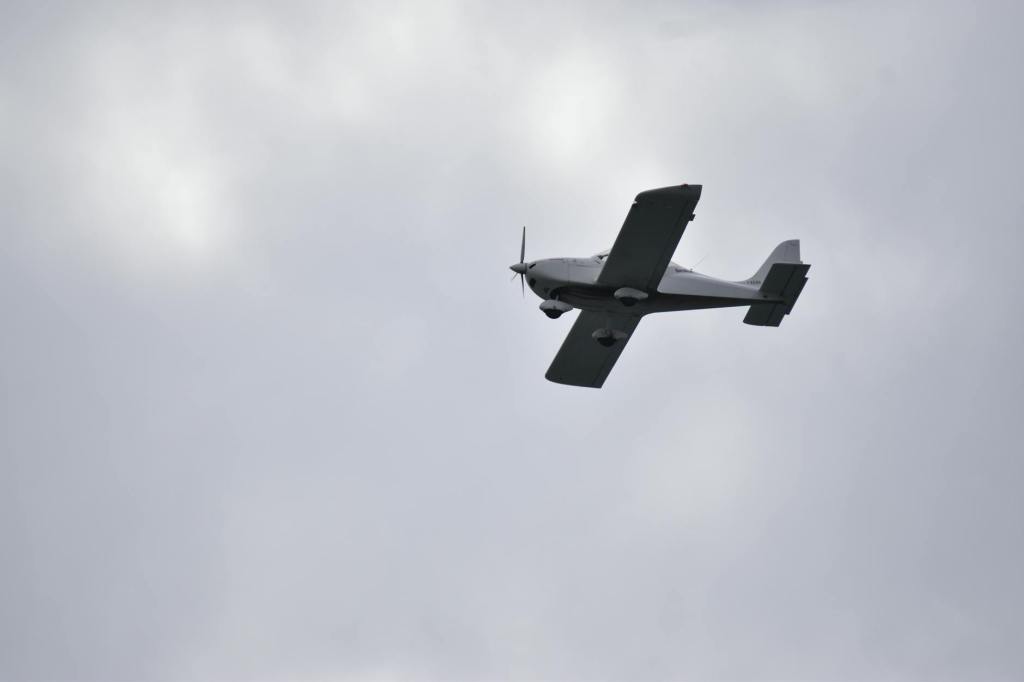
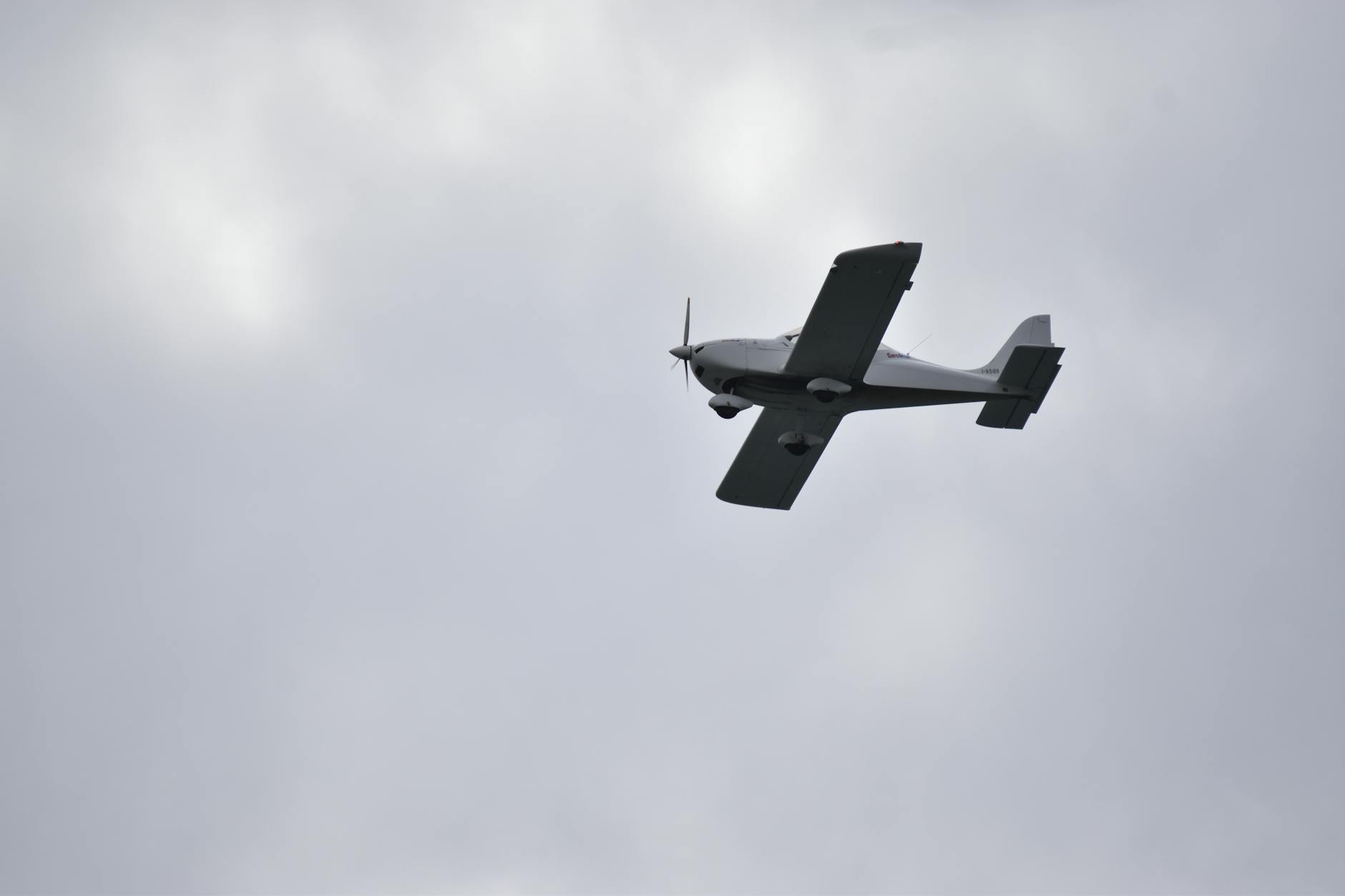
On October 16, 2025, Darrin Smedsmo was flying over Lower Red Lake in Northern Minnesota when he heard a noise he described as his “engine laboring.”1 The propeller on his single-engine 1946 Stinson 108-1 had failed, forcing him to make an emergency landing.2 With a lake underneath him and a swamp just to the side of him, Smedsmo had to quickly make a decision, and the only safe landing option was the road dividing the two.3 Within a few minutes, Smedsmo had safely landed his aircraft on Minnesota Highway 1, just twenty miles west of the town of Red Lake in the western part of the Red Lake Nation reservation.4 Darrin Smedsmo probably felt like it was his lucky day after pulling off an emergency landing, but shortly after, tribal police were called to report the emergency landing, and Smedsmo’s plane was seized.5
The Red Lake Nation cited a violation of the Tribe’s Resolution No. 59-78 for impounding the aircraft, a 1918 measure that prohibits “the flying of any airplanes over lands of the Red Lake Band of Chippewa Indians at an altitude of less than 20,000 feet.”6 Smedsmo walked away from the reservation with a citation in hand, and a hearing set for November 3rd—only for the hearing to be canceled by the Red Lake Nation three days before it was set to occur and not be rescheduled.7 This latest intersection of tribal sovereignty and federal aviation laws begs the question: Can a tribe regulate airspace and seize the aircraft of a non-tribal member?
Typically, the federal government has “exclusive sovereignty of airspace,” and all plans and policies for the use of navigable airspace are developed by the Federal Aviation Administration (FAA);8 however, the Red Lake Nation’s unique tribal status could complicate whether the Tribe had the authority to pass the Resolution limiting the airspace above the reservation. The Red Lake Nation has lived in the area since the Dakota moved from the region in the mid-1700s.9 Through treaties, the Tribe gave up millions of acres of land, but never fully ceded the reservation—meaning the remaining land was never allotted and was held in common by all members of the Tribe.10 By holding the land in common, the reservation is deemed “closed,” allowing the Tribe to regulate how non-members can visit or live on the reservation.11 The Tribe’s unique status also exempts it from Public Law 280, a law passed by Congress in 1953 that gave six states—including Minnesota—criminal jurisdiction over tribal members and non-tribal members on reservations.12 Consequently, Minnesota state courts and the state’s government do not have jurisdiction on the Red Lake reservation, and all laws are enacted and enforced by the Tribal Council, with federal courts still retaining some jurisdiction.13
Despite federal regulations being in place that allow aircraft to make emergency or forced landings when “necessary for safety or the preservation of life or health,”14 Red Lake believed it had the authority to seize the aircraft, and case law may just back it up. In Montana v. United States, the Court held that a tribe may “retain inherent power to exercise civil authority over the conduct of non-Indians on fee lands within its reservation when that conduct threatens or has some direct effect on the political integrity, the economic security, or the health or welfare of the tribe.”15 With this case law in their back pocket, Red Lake’s “closed” reservation status gives them the ability to argue that Smedsmo’s landing that occurred “without prior authorization or required coordination with Tribal authorities” and had an effect on the health or welfare of the tribe.16
Smedsmo has expressed that “if he does not receive a favorable outcome in tribal court, he will petition the US federal courts in hopes of getting his plane back.”17 In federal court, Smedsmo will most likely argue that the Resolution conflicts with federal aviation law and that the Tribe did not have the authority to seize his plane. The Supremacy Clause of the US Constitution enables the federal government to enforce treaties and enact legislation without interference from the states.18 As a result, when tribal law and federal law are in conflict, the Supremacy Clause allows federal law to preempt any tribal law.19 If the Resolution were a valid law, any airspace restrictions “would have been marked on [Smedsmo’s] VFR aeronautical chart,” alerting him that the tribal airspace was not navigable.20
In addition to the preemption argument, Smedsmo could argue that his due process rights were violated when a Resolution that had not been published and was not on aeronautical charts was enforced against him, leading to the seizure of his aircraft. It was not until after his emergency landing that the Tribe posted the Resolution, making it public knowledge.21 There are currently no federal laws that require tribes to publish their laws, resolutions, or ordinances in a way that makes them accessible to the general public, and tribal laws are notoriously difficult to find as they are not published in a consolidated resource.
The Tribe, however, will most likely attempt to invoke the condition in Montana, which could make the seizure legal. By arguing that Smedsmo’s low-altitude flight and unrestricted air access could have threatened or had a direct effect on the “political integrity, the economic security, or the health or welfare of the tribe,” the Tribe may be able to prove that the seizure was legal, and it could supersede Smedsmo’s preemption argument.22 The Tribe could also attempt to argue that because of their “closed” reservation status and the fact that it is not subject to Public Law 280, it has the right to control access to tribal territory—which could include the airspace above the reservation.23
As of early January 2026, Smedsmo’s tribal hearing has still not been rescheduled, and his vintage plane sits out in the open on tribal land.24 The standoff between Smedsmo and the Red Lake Nation highlights a collision between tribal sovereignty and federal aviation law. While the Tribe’s desire to control its airspace stems from its “closed” status and sovereignty, the lack of public notice and the emergency circumstances of Smedsmo’s landing only make you feel sympathy for the pilot. Whether resolved in tribal or federal court, the outcome could have significant implications for both aviation law and the extent of tribal sovereignty over the airspaces above reservations across the country.
*Stokli Ashcraft, J.D. Candidate, University of St. Thomas School of Law Class of 2025 (Senior Editor).
- Melissa Olson, Red Lake Nation Seized Roseau Man’s Plane After Emergency Landing, MPR News (Nov. 5, 2025 19:49 CT), https://www.mprnews.org/story/2025/11/04/red-lake-nation-seized-roseau-mans-plane-after-emergency-landing [https://perma.cc/2UC6-R85F]. ↩︎
- Id. ↩︎
- Id. ↩︎
- Id. ↩︎
- Id. ↩︎
- Res. No. 59-78 (1918) (Red Lake Band of Chippewa Indians). ↩︎
- Matt Ryan, Tribe Seizes Aircraft After Emergency Landing, Avweb (Nov. 10, 2025 14:17 ET), https://avweb.com/aviation-news/tribe-seizes-plane-minnesota-emergency/ [https://perma.cc/CE23-4PKT]. ↩︎
- 49 U.S.C. § 40103(a)(1), (b). ↩︎
- Miskwaagamiiwi-Zaagaiganing / Red Lake Nation, Minn. Indian Affs. Council, https://mn.gov/indian-affairs/tribal-nations-in-minnesota/miskwaagamiiwi-zaagaiganing-red-lake-nation.jsp#:~:text=Red%20Lake%2C%20because%20of%20its,or%20live%20on%20the%20reservation [https://perma.cc/LWS9-6QWC], (last visited Jan. 6, 2025). ↩︎
- Id. ↩︎
- Id. ↩︎
- Pub. L. No. 280, 67 Stat. 588–89 (1953). ↩︎
- Minn. Indian Affs. Council, supra note 9. ↩︎
- 19 C.F.R. §122.35 (2025). ↩︎
- Montana v. United States, 450 U.S. 544, 566 (1981). ↩︎
- Red Lake Nation Statement Regarding Impoundment of Aircraft Following Emergency Landing on Sovereign Lands, Red Lake Band of Chippewa Indians (Nov. 3, 2025), https://alphanews.org/wp-content/uploads/2025/11/2025.11.03-RLBCI-Press-Release.pdf [https://perma.cc/5PHF-X2X4]. ↩︎
- Olson, supra note 1. ↩︎
- U.S. Const. art. VI. ↩︎
- Id. ↩︎
- Ryan, supra note 7. ↩︎
- Red Lake Tribal Council – PUBLIC NOTICE, Red Lake Nation News (Oct. 16, 2025), https://www.redlakenationnews.com/story/2025/10/16/news/red-lake-tribal-council-public-notice/135303.html [https://perma.cc/VJ2R-N999]. ↩︎
- Montana v. United States, 450 U.S. 544, 566 (1981). ↩︎
- “The ad coelum doctrine is a legal principle that asserts a landlord’s ownership extends from the surface of their land to the sky above and down to the center of the earth.” Ad Coelum Doctrine: A Comprehensive Guide to Land Ownership, USLegal, https://legal-resources.uslegalforms.com/a/ad-coelum-doctrine#:~:text=The%20ad%20coelum%20doctrine%20is,minerals%20found%20within%20the%20land [https://perma.cc/H4BJ-CUKB] (last visited Jan. 11, 2025). ↩︎
- Wilko Martinez-Cachero, Native American Tribe Snatches Pilot’s Plane from Him After Emergency Landing on Their Reservation, MSN, https://www.msn.com/en-us/news/us/native-american-tribe-snatches-pilot-s-plane-from-him-after-emergency-landing-on-their-reservation/ar-AA1PAP0l?ocid=PerDHP [https://perma.cc/PD37-H4UD] (last visited Jan. 6, 2026). ↩︎
No-Fly Zone? The Red Lake Plane Seizure
By Stokli Ashcraft
 University of St. Thomas Law Journal
Leave a comment