Isaac Rillo*
Three Justices in the history of the Supreme Court can claim Minnesota as their home: Pierce Butler (1923–1939), Warren Burger (1969–1986), and Harry Blackmun (1970–1994).1
Although Pierce Butler was the first Minnesotan to serve as a Supreme Court Justice, he is considered one of the most obscure, despite nearly seventeen years on the bench.2 With that in mind, this blog post aims to provide a short biography of Butler, briefly comment on scholarship regarding his jurisprudence, and finish with a discussion of his dissent in Buck v. Bell.3
Butler was born to Irish immigrant parents on March 17, 1866, in a log cabin south of Saint Paul.4 This harsh, rural upbringing shaped Butler’s intense work ethic and fiery disposition.5 Having made his way through the country school system, Butler attended Carleton College, where he studied courses in Economics, Moral Philosophy, and the Bible.6 As one author remarked, “It was in that program that he first encountered the type of laissez-faire economic philosophy that would later characterize his jurisprudence on the Supreme Court.”7
After Carleton, Butler began his legal career as an apprentice at the Saint Paul firm, Pinch & Twohy.8 He was admitted to the bar at the age of twenty-two and subsequently worked in a wide range of legal positions in public and private practice, including Assistant County Attorney in Ramsey County, Ramsey County Attorney, Special Assistant Attorney General, and served as counsel for railroads.9 In every role, Butler was known for his unrelenting tenacity and zeal in the courtroom, earning the moniker, “Fierce Butler.”10 Although he was a formidable opponent, he was nevertheless well-liked by other lawyers and respected in the community.11
Any mention of Butler must acknowledge his Catholic faith: It took a central place in his life, a feature that was publicly and widely recognized.12 Far from a pious accessory, he “took his Catholicism seriously, and the Church’s teachings were at the core of his conception of morality.”13 Several published speeches attest to his convictions, including his graduation oration from Carleton,14 his address at the Catholic Educational Association,15 and an address to the International Eucharistic Conference.16 In those public addresses, Butler highlighted the faith’s positive influence on the formation of character and the import of a faith-informed approach to civic life.17
Following a diverse legal career, Butler was nominated and confirmed as a Justice of the Supreme Court in 1922.18 Butler often wrote technical opinions on public utilities regulation and taxation, his areas of expertise.19 In terms of style, Butler is widely regarded as a judicial minimalist, favoring more direct, restrained composition.20 Ideologically, he is remembered as one of the “Four Horsemen” on the Supreme Court, a derogatory term describing the conservative bloc of justices who generally opposed the New Deal agenda.21 As such, scholars have caricatured Butler’s jurisprudence as a laissez-faire driven, blanket conservative.22
In response to this reductive characterization, however, several scholars have presented the nuances of his constitutional jurisprudence, which is not easily pigeonholed as conservative or liberal.23 While it is true that Butler generally held conservative views regarding a number of issues, including free speech and individual property rights,24 he took a more liberal approach to the Fourth Amendment, and a more libertarian approach to the Fourteenth Amendment.25
For example, with respect to his Fourth Amendment jurisprudence, he often exhibited strong sympathy for criminal defendants, a characteristic not often shared by his conservative contemporaries.26 In his Olmstead v. United States dissent, Butler stood opposed to the conservative majority, who held that a warrantless wiretap did not violate the Fourth Amendment because it did not result in a physical invasion of the defendant’s house.27 For his part, Butler would have construed the Fourth Amendment more broadly and held that the warrantless wiretap was an unlawful search under the Fourth Amendment.28
By contemporary standards, Butler’s libertarianism emerges most clearly in his Fourteenth Amendment jurisprudence as one of the “Court’s strongest adherents to Lochner.”29 Indeed, several of his post-Lochner opinions continued the trend of striking down state laws infringing on “private property rights, the right to contract, and other economic rights.”30 Even from these brief examples, one can conclude that Butler’s jurisprudence evinces more nuance than many have given credit.
In one Fourteenth Amendment case, Butler is remembered not so much for his jurisprudence as for his silence. For that reason, his lone dissent in Buck v. Bell is worth noting in isolation. There, the majority upheld a Virginia law providing for the forced sterilization of an allegedly “feeble-minded” woman, Carrie Buck.31 Writing for the majority, Justice Holmes first emphasized that Ms. Buck had been given the procedural safeguards as required by due process.32 He then acknowledged that Ms. Buck’s “attack” was directed at “substantive law” itself, but nevertheless concluded that the law must stand, infamously reasoning that “The principle that sustains compulsory vaccination is broad enough to cover cutting the Fallopian tubes . . . . Three generations of imbeciles are enough.”33
Here, we cannot study Butler’s jurisprudence because he did not write an opinion. But why was Butler the lone, silent dissent in Buck v. Bell?
Many have attempted to answer this question, but it remains a product of speculation. One scholar suggests that the sterilization law was “inconsistent with [Butler’s] expansive view of personal liberty and autonomy under the Fourteenth Amendment.”34 Others, writing from an explicitly Catholic perspective, would agree, but would base Butler’s respect for personal autonomy in his Catholic view of the human person.35 Such a conception holds that everyone is made in God’s image and equally worthy of the same rights, regardless of society’s perception of their alleged defects, social utility, or genetic composition.36 While it is true that Catholics believe individuals might make sacrifices for the common good, using the state’s welfare as a pretext to violate one’s intrinsic dignity does not fall into that category. Thus, according to such scholars, Butler’s Catholic understanding of the human person may have been the impetus for his dissent, rather than a purely legal one.37
Today, few would sympathize with the majority’s decision on constitutional or moral grounds. Indeed, there is a reason that every University of St. Thomas Law student reads Buck v. Bell in the first week of school, and it is not for Justice Holmes’s prose. Instead, students study Buck v. Bell to consider its moral issues: the dehumanizing language,38 the dismissal of the Equal Protection arguments,39 the unsettling historical context regarding eugenics and gender discrimination,40and ultimately, the implications that arise when law is divorced from morality.41 Importantly, the extent that Butler’s silent dissent was informed by a version on this last point, severing law from personal morality, remains speculative: He never stated—and rightly so—that personal moral or religious convictions should govern judicial decisions.
Whatever the case may be, we can say that Butler led a remarkable life. Hopefully, this blog helps remember him as a fierce advocate, a nuanced jurist, and a man of faith and integrity.
*Isaac Rillo, J.D. Candidate, University of St. Thomas School of Law Class of 2026 (Articles Editor).
- The Law Librarian, For the Record—U.S. Supreme Court Justice from Minnesota (and Ramsey County), Ramsey Cnty. L. Libr. Blog (July 3, 2018), https://ramseylawlibrary.org/for-the-record-u-s-supreme-court-justices-from-minnesota-and-ramsey-county/ [https://perma.cc/H5QP-JAXF]. ↩︎
- David R. Stras, Pierce Butler: A Supreme Technician, 62 Vand. L. Rev. 695, 719 (2009). ↩︎
- This is a simple blog post. As such, it does not seek to offer a comprehensive assessment of Butler’s judicial philosophy, jurisprudence, or how Catholicism or other worldviews informed his decision-making. Nor does the author endorse any of the ideas presented. Instead, I seek to provide a starting point to these topics and some resources if one wants to take a deeper dive. ↩︎
- Ashley K. Fernandes, The Power of Dissent: Pierce Butler and Buck v. Bell, 12 J. for Peace & Just. Stud. 115, 115 (2002). ↩︎
- See Stras, supra note 2, at 698. (describing early morning chores and labor on the farm). ↩︎
- David Schroeder, More than A Fraction: The Life and Work of Justice Pierce Butler (May 2009) (Ph.D. dissertation, Marquette University) (ProQuest). ↩︎
- Stras, supra note 2, at 699. ↩︎
- Stras, supra note 2, at 702. ↩︎
- Stras, supra note 2, at 703–07. ↩︎
- Fernandes, supra note 4, at 116. ↩︎
- Fernandes, supra note 4, at 116. ↩︎
- Fernandes, supra note 4, at 117. ↩︎
- Fernandes, supra note 4, at 117. ↩︎
- Ryan J. Barilleaux, Justice Pierce Butler’s Catholic Jurisprudence, 25 Cath. Soc. Sci. Rev. 121, 122 (2020). ↩︎
- Id. ↩︎
- Id. ↩︎
- See id. at 122–23. ↩︎
- Fernandes, supra note 4, at 118. ↩︎
- Stras, supra note 2, at 737. ↩︎
- Stras, supra note 2, at 732, 734. ↩︎
- Barilleaux, supra note 14, at 123. ↩︎
- Barilleaux, supra note 14, at 123. ↩︎
- Stras, supra note 2, at 717–18. ↩︎
- Stras, supra note 2, at 719–20. ↩︎
- Stras, supra note 2, at 718, 720. ↩︎
- See Stras, supra note 2, at 721 (“It was not uncommon for Butler to take a position contrary to his conservative colleagues when addressing cases involving the [Fourth Amendment].”). ↩︎
- Barilleaux, supra note 14, at 126–27; see generally Olmstead v. United States, 277 U.S. 438, 466 (1928) (Butler, P., dissenting) (articulating an expansive position on privacy). ↩︎
- See Stras, supra note 2, at 720–21. ↩︎
- Stras, supra note 2, at 726. ↩︎
- Stras, supra note 2, at 727. ↩︎
- Buck v. Bell, 274 U.S. 200, 205 (1927). ↩︎
- Id. at 207. ↩︎
- Id. at 207. ↩︎
- Stras, supra note 2, at 731. ↩︎
- See Fernandes, supra note 4, at 124–25 (“The synthesis of respect for the individual, a normative view of the state, and a traditional Catholic theology can all be seen as aspects fundamental to Christian personalism. Perhaps the most eloquent proponent of this philosophical amalgam was Jacques Maritain, and we shall see in his philosophy a systemization of Butler’s deeply-held convictions.”); Barilleaux, supra note 14, at 129 (asserting that Butler’s “votes were largely consistent” with Catholic social principles, including the dignity of the human person). ↩︎
- Fernandes, supra note 4, at 125. ↩︎
- Barilleaux, supra note 14, at 136(“Butler’s dissent in Buck v. Bell was not based so much on strictly legal objections as on a moral one.”). ↩︎
- Moral Reasoning for Lawyers: Day One (Aug. 2023) (unpublished course PowerPoint slides) (on file with author). ↩︎
- Id. ↩︎
- Id. ↩︎
- Id. ↩︎
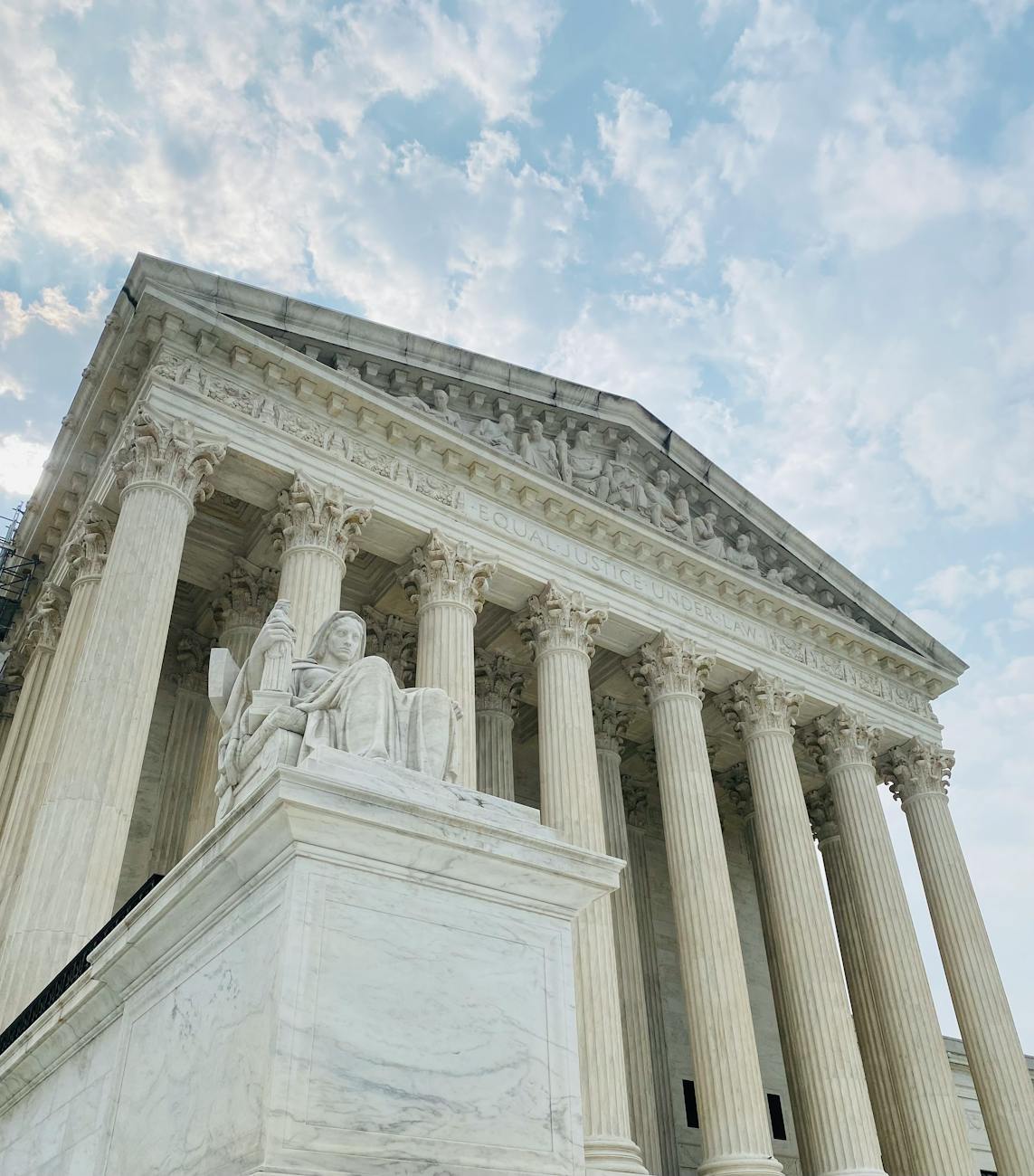
Justice Pierce Butler: A Minnesotan You Never Knew
By Isaac Rillo
 University of St. Thomas Law Journal
Leave a comment