By Lizzie Edinger*
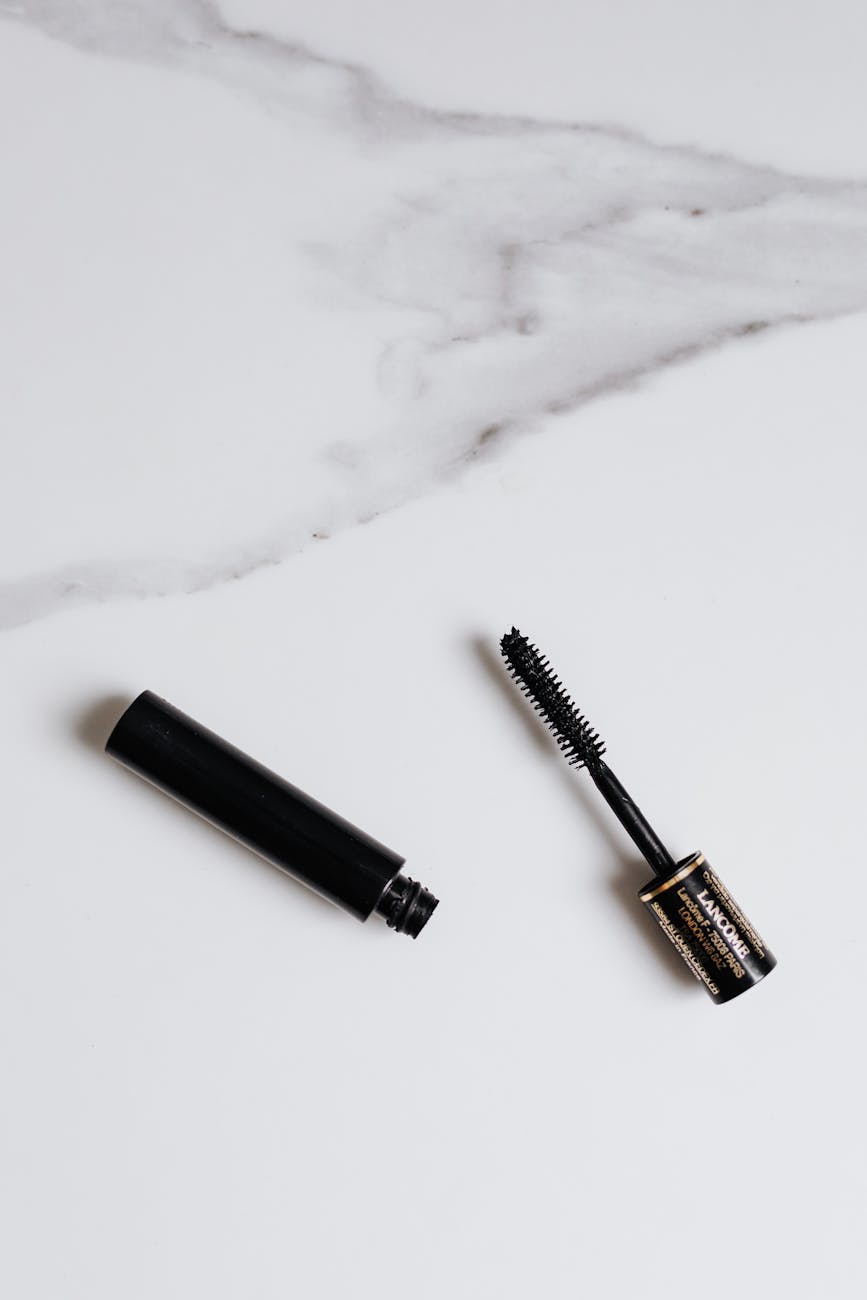
If you are like me, at some point in your life you have probably been subjected to the “dupe era.” You may find yourself pondering whether you want to splurge on an expensive product or settle for its dupe to save some money. Oftentimes, I settle but am thoroughly disappointed when the product is not identical to its luxury version. This, however, may be the exact strategy of the brand creating the dupe to avoid liability for intellectual property infringement. For those who are unfamiliar, “dupes” refer to “duplicates” of beauty, fashion, or lifestyle products that are similar to expensive products in appearance or performance, but are typically more affordable to the consumer.1
In this Blog, I will first address some basics of intellectual property, followed by a discussion of the Lanham Act, pending litigation, and how a court recently analyzed the likelihood of confusion element under claims of trademark and trade dress infringement.
What is a Patent?
Patents and trademarks are both forms of intellectual property.2 According to the United States Patent and Trademark Office, a patent gives the inventor “the right to ‘exclude others from making, using, offering for sale or selling’ an invention.”3 Design patents, which may cover “any new, original, and ornamental design for an article of manufacture,” are granted for a term of fifteen years.4 To issue a patent, an individual’s invention must be: (1) usable; (2) identifiable; (3) novel; and (4) nonobvious.5
What is a Trademark?
A trademark, on the other hand, is “any word, phrase, symbol, design, or a combination of these things that identifies your goods or services.”6 Essentially, a trademark represents how consumers differentiate a brand from its competitors.7 Trademarks provide legal protection and support against counterfeiting or fraud.8 Trade dress protects the overall image of the product, including its size, shape, or color and may include the design and packaging of a product.9
The Legality of the Dupe
Historically, dupes do not infringe on intellectual property rights absent unfair practices or misleading advertising.10 However, counterfeit goods do infringe upon one’s intellectual property rights because they use another brand’s trademarks to deliberately mislead consumers.11 This is where the Lanham Act comes into play.12 Under this Act, individuals can be held civilly liable for trademark infringement on registered marks.13 Additionally, individuals can be liable by civil action if they use false descriptions likely to cause confusion of the origin of such product, or misrepresent the nature, characteristics, qualities, or origin of goods in advertising.14
Clothing Dupe: Lululemon v. Costco
Recently, on June 27, 2025, Lululemon filed a complaint against Costco in United States District Court in the Central District of California, alleging intellectual property infringement.15 Lululemon filed the action for alleged trademark and trade dress infringement, unfair competition under the Lanham Act, patent infringement, and violations of the California Unfair Business Practices Act.16 The cause of action arises due to the alleged infringement upon Lululemon’s Scuba hoodies, Define jackets, and ABC pants.17 Lululemon alleged in its complaint that one reason retailers want to sell dupes of their brand is because of consumer confusion and association between the dupe and their brand.18 This case is in the early stages of litigation, but begs the question, why does consumer confusion matter?
Beauty Dupe: Benefit Cosmetics, LLC v. E.L.F. Cosmetics, Inc.
Generally, the elements of trademark infringement include ownership over a valid mark, priority, and that “the defendant’s mark is likely to cause confusion in the minds of consumers about the source or sponsorship of the goods or services offered under the parties’ marks.”19 To prevail on a cause of action for an unregistered trade dress infrin- gement, a plaintiff must prove “(1) the trade dress is nonfunctional, (2) the trade dress has acquired secondary meaning, and (3) there is a ‘substantial likelihood of confusion’ between the [parties’] products.”20
For the purposes of this Blog, I will focus on how to prove the likelihood of confusion element, which is analyzed by courts using a holistic test to determine how similar the marks at issue are and whether the goods are “sufficiently related [such] that consumers are likely to assume (mistakenly) that they come from a common source.”21
In Benefit v. E.L.F., Benefit claimed that e.l.f. infringed on its trademark and trade dress of the “Roller Lash,” mascara by copying its name, packaging, and marketing when it produced “Lash ‘N Roll.”22 Ultimately, the court determined that e.l.f. did not infringe on Benefit’s valid and enforceable trademarks or its trade dress because Benefit failed to prove a likelihood of confusion.23
The court held that the trademark infringement claim failed because although the strength of the mark and proximity of the goods weighed in favor of a likelihood of consumer confusion, the remaining factors did not.24 The strength of the mark and the proximity of the goods favored a likelihood of confusion because e.l.f. acknowledged that Lash ‘N Roll would draw a consumer connection to Roller Lash and e.l.f. tested its formulas against Roller Lash to “achieve the closest comparison.”25
The similarity of marks favored e.l.f. because although the mascaras were “superficially identical,” the meaning and commercial impression were different because Lash ‘N Roll was consistent with other e.l.f. music-related mascara and included a house mark.26 Additionally, there was a lack of evidence of actual confusion, and the degree of consumer care disfavored a likelihood of confusion because the parties treated their consumers as sophisticated.27 Marketing and advertising also favored e.l.f. because Roller Lash is available in department stores and Sephora, whereas Lash ‘N Roll is in drug stores.28 Finally, the court determined e.l.f.’s intent disfavored finding a likelihood of confusion because a dupe is able to copy or take inspiration from other products so long as there is no intent to deceive consumers.29
The court’s analysis for trade dress infringement resembled the findings in its trademark infringement analysis and accordingly, Benefit did not show that Lash ‘N Roll, “while it is a ‘dupe’ of Roller Lash, actually dupe[d] any consumers.”30 Therefore, even if there is a hypothetical finding of a likelihood of confusion, that does not equate to a probable finding.31 Consequently, e.l.f.’s dupe did not infringe on Benefit’s trademarks or trade dress.32
Conclusion
Although dupes may take inspiration from other products, in order for a brand to hold another accountable for trademark or trade dress infringement, one must show a likelihood of confusion as seen in Benefit v. E.L.F. Proving a likelihood of confusion, however, may be more challenging than brands may realize.
*Lizzie Edinger, J.D. Candidate, University of St. Thomas School of Law Class of 2025 (Senior Editor).
- Dupes, The Fashion Law, https://www.thefashionlaw.com/dupes/ (last visited Feb. 19, 2026) [https://perma.cc/X7C4-N5PE]. ↩︎
- Patent Essentials, U.S. Pat. & Trademark Off., https://www.uspto.gov/patents/basics/essentials#questions (last visited Feb. 19, 2026) [perma.cc/K7C9-8422]. ↩︎
- Id. ↩︎
- Id. ↩︎
- Id. ↩︎
- What is a Trademark?, U.S. Pat. & Trademark Off., https://www.uspto.gov/trademarks/basics/what-trademark (last visited Feb. 19, 2026) [https://perma.cc/5HJJ-RBSL]. ↩︎
- Id. ↩︎
- Id. ↩︎
- Yellowfin Yachts, Inc. v. Barker Boatworks, LLC, 898 F.3d 1279, 1288 (11th Cir. 2018); Benefit Cosmetics, LLC v. E.L.F. Cosmetics, Inc., No. 23-CV-00861-RS, 2024 WL 5135604, at *3 (N.D. Cal. Dec. 17, 2024). ↩︎
- The Difference Between Dupes and Counterfeits: What Consumers and IP Rights Owners Need to Know, Kilburn & Strode LLP (Nov. 29, 2024), https://www.kilburnstrode.com/knowledge/european-ip/the-difference-between-dupes-and-counterfeits %5Bhttps://perma.cc/2VUX-7S86%5D. ↩︎
- Id. ↩︎
- See 15 U.S.C. §§ 1051 et seq. (1946). ↩︎
- 15 U.S.C. § 1114. ↩︎
- 15 U.S.C. § 1125(a). ↩︎
- Complaint at 1–2, Lululemon Athletica Canada Inc. v. Costco Wholesale Corporation, No. 2:25-CV-05864 (C.D. Cal. June 27, 2025). ↩︎
- Id. at 4, ¶ 8, 29. ↩︎
- Id. at 5, ¶ 14. ↩︎
- Id. at 3–4, ¶ 6. ↩︎
- About Trademark Infringement, U.S. Pat. & Trademark Off., https://www.uspto.gov/page/about-trademark-infringement (last visited Feb. 19, 2026) [https://perma.cc/9WQH-CX9P]. ↩︎
- Benefit Cosmetics, LLC v. E.L.F. Cosmetics, Inc., No. 23-CV-00861-RS, 2024 WL 5135604, at *3 (N.D. Cal. Dec. 17, 2024) (citation omitted). ↩︎
- About Trademark Infringement, supra note 19; see also Yellowfin Yachts, Inc. v. Barker Boatworks, LLC, 898 F.3d 1279, 1289 (11th Cir. 2018) (stating that the factors of “likelihood of confusion” in the Eleventh Circuit include the strength of the trade dress, the similarity of the design of the products, the similarity of the products, the customers, the advertising and media, the intent of the defendant, and evidence of actual confusion). ↩︎
- Benefit Cosmetics, 2024 WL 5135604, at *1. ↩︎
- Id. ↩︎
- Id. at *7–8, *11. ↩︎
- Id. at *8. ↩︎
- Id. at *5. ↩︎
- Id. at *7 (noting that the brands used “huge amounts” of their time, money, and effort to obtain customer reviews). ↩︎
- Id. at *9–10. ↩︎
- Id. at *10–11. ↩︎
- Id. at *17. ↩︎
- Id. ↩︎
- Id. ↩︎
The Dupe Era
By Lizzie Edinger
 University of St. Thomas Law Journal
Leave a comment