AnnaGrace Ziebarth*
While the world was watching the 2026 Winter Olympic Games in Milan and Cortina d’Ampezzo, preparations for the 2028 Summer Olympics in Los Angeles (LA28) were already well underway. Hosting the Olympics brings billions of dollars in revenue1 and generates millions in legal fees.2 The vast scope of logistics required to coordinate the Games creates a unique set of legal issues that have historically required judicial intervention.3 US courts have repeatedly been asked to adjudicate intellectual property, due process, and urban development disputes arising in the shadow of Olympic hosting.
Intellectual Property Rights
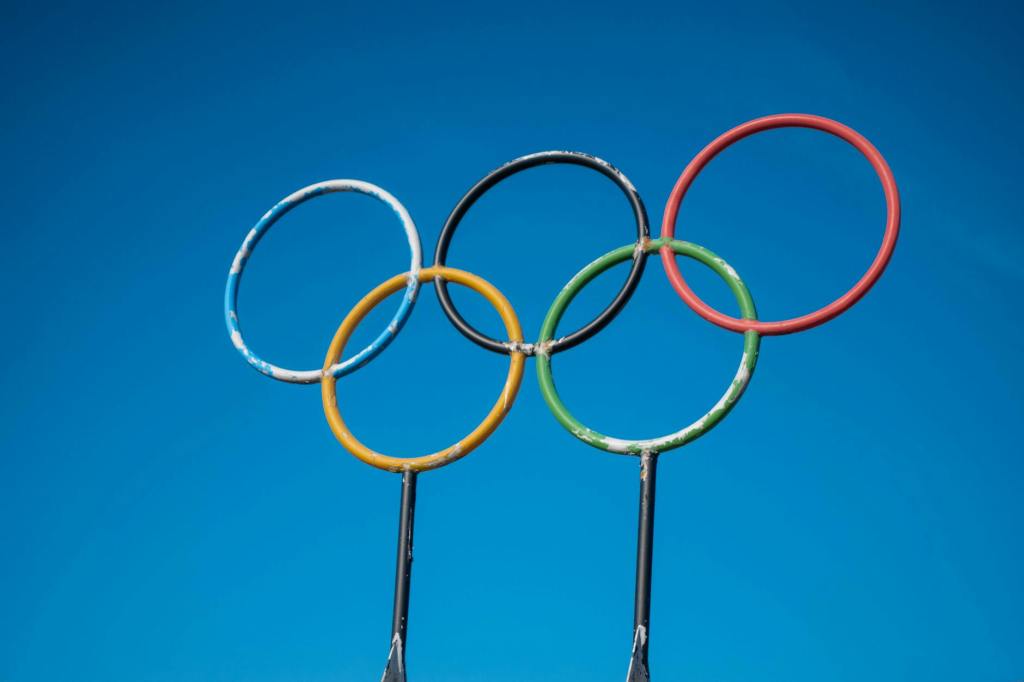
One recurring area of dispute surrounding Olympic hosting involves the protection of Olympic branding and intellectual property. The iconic Olympic rings originated in 1913 and officially made their debut in the 1920 Olympic Games of Antwerp, Belgium.4 The five colors represent the universality of the Olympic Games,5 with National Olympic Committee (NOC) members spanning 206 nations and territories.6 Currently, use of the Olympic symbol requires the express written consent of the International Olympic Committee (IOC).7 In the United States, the Ted Stevens Olympic and Amateur Sports Act (Ted Stevens Act) grants exclusive rights to a single corporation to use the name United States Olympic and Paralympic Committee (USOC) and the Olympic name and interlocking rings symbol.8
Leading up to the 1984 Los Angeles Olympics, the Second Circuit resolved an issue regarding permitted usage of the Olympic rings in U.S. Olympic Comm. v. Intelicense Corp., S.A.9 Intelicense, a Swiss corporation, sought approval from the USOC to use the Olympic ring symbol.10 After the USOC denied Intelicense’s use of the symbol, Intelicense proceeded to license it for use in the United States.11 The USOC filed suit under the earlier version of the Ted Stevens Act, but Intelicense argued that it had combined the Olympic rings with other designs which removed them from the scope of the statute.12 The court rejected Intelicense’s interpretation, reasoning that Intelicense had no property interest in the Olympic symbol and therefore required express permission from the USOC to use it.13 Courts have recognized that the statutory protections granted to the USOC under the Ted Stevens Act extend beyond traditional trademark principles, allowing the committee to restrict certain uses of Olympic symbols even without a showing of consumer confusion.14
As global branding and mass markets expand, vigilant enforcement of Olympic intellectual property rights will become increasingly important. The Olympic rings have served as a globally recognized symbol of international athletic competition for over a century.15 Because the USOC possesses authority to control the commercial use of Olympic symbols under the Ted Stevens Act, continued monitoring of unauthorized uses will be critical as preparations accelerate for the 2028 Los Angeles Summer Olympics.16
Athlete Eligibility and Due Process
Another area of legal concern for Olympic organizers involves athlete eligibility and due process, particularly when disputes arise over who may compete in the Olympic Games. Most notably, in DeFrantz v. U.S. Olympic Comm., twenty-five athletes sued over the USOC’s decision not to send an American team to the 1980 Moscow Olympics following the Soviet Union’s invasion of Afghanistan.17 While the USOC was influenced by the Carter administration’s push for boycotting the Moscow Olympics, the athletes argued that the USOC exceeded its authority in making the decision.18 The court rejected their claims, holding that the USOC did not violate constitutional rights because the Constitution does not protect the right to compete in the Olympics.19
Other eligibility disputes, such as Michels v. U.S. Olympic Comm., demonstrate that USOC authority extends to the enforcement of eligibility rules.20 In Michels, an athlete challenged his suspension after testing positive for elevated testosterone levels prior to the 1984 Los Angeles Olympics.21 The court held that Michels did not have a private cause of action under the predecessor to the Ted Stevens Act and remanded with instructions to dismiss the suit.22
Together, these cases demonstrate that US courts tend to defer to the USOC on questions of eligibility.23 Athletes must rely on internal procedures or arbitration for due process concerns, and this will remain relevant as preparations for LA28 continue.
First Amendment Issues
The scale of construction and urban planning required for hosting the Games often intersects with constitutional law as it presents complex legal challenges for the hosting city. In preparation for the 1996 Summer Olympics, the City of Atlanta instituted a 1994 Sign Ordinance and an Olympic Sign Ordinance to regulate promotion of the upcoming Games.24 Outdoor Systems, Inc. challenged the ordinances in Outdoor Systems, Inc. v. City of Atlanta, arguing that the ordinance violated their First Amendment rights by restricting free speech.25 The court upheld the 1994 Sign Ordinance but enjoined the City of Atlanta from enforcing the Olympic Sign Ordinance because it was too restrictive and did not clearly support the city’s goal of maintaining aesthetics and safety.26
As Los Angeles prepares to host LA28, similar First Amendment considerations may arise as the city plans to regulate signage, advertising, and promotion related to Olympic events. Large international events often prompt cities to institute temporary restrictions to preserve the aesthetic of the city and protect Olympic sponsors.27 However, Outdoor Systems demonstrates that Los Angeles will need to carefully consider the First Amendment implications of any attempt to control signage to ensure that such regulations do not violate free speech rights.28
Past disputes from prior US Olympic Games will continue to be informative as LA28 approaches. Issues involving intellectual property protection, athlete eligibility, and constitutional limitations on regulations demonstrate the wide range of legal questions that courts have addressed in the context of the Olympics. By anticipating these challenges and learning from past litigation, LA28 organizers can better navigate the legal landscape accompanying the Olympics.
*AnnaGrace Ziebarth, J.D. Candidate, University of St. Thomas School of Law Class of 2027 (Associate Editor).
- James McBride & Noah Berman, The Economics of Hosting the Olympic Games (July 20, 2016, at 19:26 CT), Council on Foreign Relations, https://www.cfr.org/backgrounders/economics-hosting-olympic-games %5Bhttps://perma.cc/GPF4-UCCL%5D. ↩︎
- Daniel Libit, Going for Gold: Team USA Eyes $100M+ in Legal Fees Since Rio Games (May 10, 2021, at 05:55 CT), Sportico, https://www.sportico. com/leagues/other-sports/2021/team-usa-legal-fees-1234629330/#:~:t ext=Going%20for%20Gold:%20 Team%20US A,Legal%20Fees%20Sin ce%20Rio%20Games [https://perma.cc/Z4WH-7A4T]. ↩︎
- See Joanne Harris, Legal Issues Gain Prominence in Run-up to Paris Olympic Games (July 16, 2024), Int’l Bar Ass’n, https://www.ibanet.org/legal-issues-gain-prominence-in-run-up-to-paris-olympic-games %5Bhttps://perma.cc/P4FR-F9KH%5D (noting that “the Olympic Games are first and foremost a sporting event, and it’s in this realm that lawyers are perhaps most heavily involved. In the lead-up to Paris 2024, there have been several cases of note.”). ↩︎
- Int’l Olympic Comm., Olympic Rings – Symbol of the Olympic Movement, https://www.olympics.com/ioc/olympic-rings [https://perma.cc/J7ED-DBZP] (last visited Feb. 26, 2026). ↩︎
- Id. ↩︎
- Int’l Olympic Comm., National Olympic Committee Showcase, https://www.olympics.com/ioc/national-olympic-committees [https://perma.cc/JH9K-GBPU] (last visited Feb. 26, 2026). ↩︎
- Int’l Olympic Comm., supra note 4. ↩︎
- 36 U.S.C. § 220506. ↩︎
- U.S. Olympic Comm. v. Intelicense Corp., S.A., 737 F.2d 263, 264 (2d Cir. 1984). ↩︎
- Id. at 265. ↩︎
- Id. ↩︎
- Id. at 267. ↩︎
- Id. ↩︎
- San Francisco Arts & Athletics, Inc. v. U.S. Olympic Comm., 483 U.S. 522, 531 (1987). ↩︎
- Int’l Olympic Comm., supra note 4. ↩︎
- U.S. Olympic Comm. v. Intelicense Corp., S.A, 737 F.2d at 265 (2d Cir. 1984). ↩︎
- DeFrantz v. U.S. Olympic Comm., 492 F. Supp. 1181, 1182–85 (D.D.C. 1980), aff’d, 701 F.2d 221 (D.C. Cir. 1980). ↩︎
- Id. at 1187. ↩︎
- Id. at 1194–95. ↩︎
- Michels v. U.S. Olympic Comm., 741 F.2d 155, 157 (7th Cir. 1984). ↩︎
- Id. at 156. ↩︎
- Id. at 158. ↩︎
- See id. at 157 (noting that “[t]he USOC was chartered by Congress in 1950. . . . The principal purpose of the Act was to provide a means of settling disputes between organizations seeking to be recognized as the NGB for a particular sport and to shield amateur athletes from being harmed by these struggles.”). ↩︎
- Outdoor Sys., Inc. v. City of Atlanta, 885 F. Supp. 1572, 1574 (N.D. Ga. 1995). ↩︎
- Id. at 1575–76. ↩︎
- Id. at 1586, 1577–78. ↩︎
- See Alex Kelham, Navigating Olympic Advertising: Rule 40 – A Global Perspective (Feb. 16, 2016), LawInSport, https://www.lawinsport.com/topics/features/item/navigating-olympic-advertising-rule-40-a-global-perspective [https://perma.cc/SJ2L-Q2AN](“London 2012 . . . looked to combat this with special legislation that protected against any unauthorised commercial association with—or ambush marketing of—the London Games.”). ↩︎
- See Outdoor Sys. Inc. v. City of Atlanta, 885 F. Supp. at 1577–78 (finding that the City of Atlanta’s Olympic Sign Ordinance was overbroad). ↩︎
 University of St. Thomas Law Journal
Leave a comment