Naomi Voehl*
Today is the first of the year, so Happy New Year to everyone except The Walt Disney Company, who is in mourning because today is also Public Domain Day, so they can say goodbye to their copyright protections for the original animations of both Mickey Mouse and Tigger. Public Domain Day is celebrated every year on January 1st because that is the day when works with newly expired copyrights officially enter the public domain.1 Copyright is a property protection that creators of works such as books, movies, and songs can obtain that legally stops others from using those same works for their own projects without the creator’s permission.2 The reason copyright has a duration limit, unlike trademarks which are in effect forever, is because it allows future generations of society to continue to innovate.3 It would be quite difficult to continue to create new works in the future without using samples of the old as more and more projects are copyrighted.4
Copyright duration is the life of the author/creator plus seventy years after their death for all works created on or after January 1, 1978.5 It does not expire on the exact anniversary of obtaining the copyright, rather, it expires at the end of the calendar year in which the expiration date occurs.6 For example, if a copyright was obtained on July 30, 1928, then it would actually expire at the end of the year 2023. Hence, January 1st was dubbed Public Domain Day. Works that are anonymous, pseudonymous, or made for hire expire ninety-five years after its first publication.7 The duration used to be a mere seventy years, but The Sonny Bono Copyright Term Extension Act of 1998, which is still the law today, extended the copyright life.8 A work for hire is “a work prepared by an employee within the scope of his or her employment” or “a work specially ordered or commissioned for use as a contribution to a collective work [or] as a part of a motion picture or other audiovisual work . . . .”9 The Extension Act also states that works for hire or posthumous works copyrighted before 1978 can be renewed after twenty-eight years from their creation so the Act can apply to them.10 If a copyright from before 1978 is renewed after twenty-eight years, it gets an additional sixty-seven years added to the duration, which leads to the total of ninety-five years.11
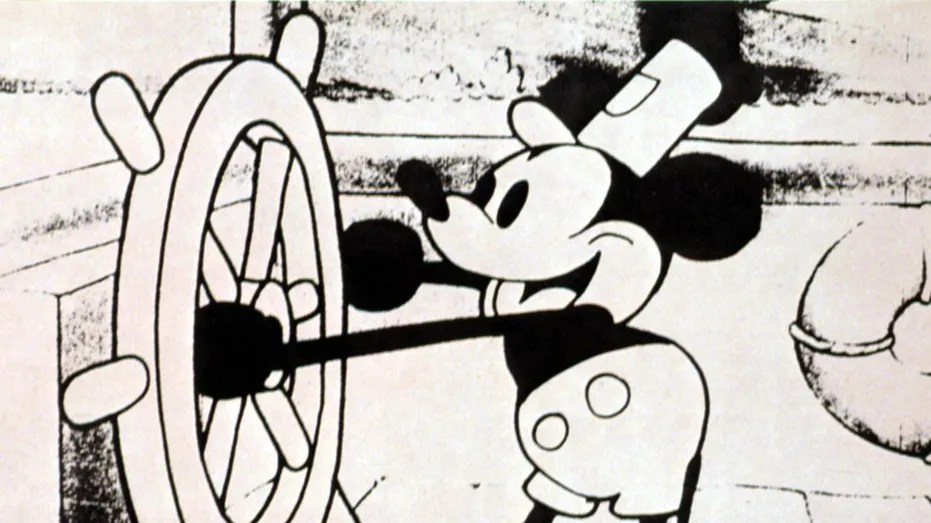
It should be of no surprise that Disney was a huge supporter in passing the Extension Act because it would allow them to extend their original animations’ copyright lifetimes.12 In fact, they were such a huge influence in creating the Extension Act that it became well-known as the Mickey Mouse Protection Act.13 The 1928 versions of Mickey Mouse and Tigger were both works for hire because they were commissioned by Disney to be part of a film and a book series, respectively, so they qualified for obtaining a renewal provided in the statute. However, that ninety-five-year renewal time is up for the 1928 versions of Mickey Mouse and Tigger. The Mickey Mouse that is entering the public domain is the original animation of the character that first appeared in the 1928 animated film Steamboat Willie.14 While Winnie the Pooh was created in 1926, Tigger did not first appear until the 1928 book by A. A. Milne, The House at Pooh Corner.15 This explains why the original version of Tigger did not enter into the public domain until today, two years after Winnie the Pooh and the other main characters.
However, just because Mickey Mouse is entering the public domain does not mean all things Mickey are fair game from now on. Only the original animation of the beloved mouse is up for grabs; all newer or more modern versions of Mickey are still under copyright, as well as the Disney logo and the Mickey Mouse ears themselves.16 As seen in the original Steamboat Willie animation, Mickey is only in black and white, which means that only the black and white version is entering the public domain. People should refrain from using color in their depictions of the original Mickey Mouse, or else they might have a lawsuit on their hands because apparently color was not added until later, so therefore it is still covered under copyright. Similarly, the original Tigger in The House at Pooh Corner looks different than the one that many of us grew up with, which means that the more modern version of Tigger that we know and love is still protected under copyright. Artists and creators will have to be careful that they only use the Tigger that does not have white on its body because the 1928 version of Tigger is only orange and black.
Two years ago, Disney went through this same situation when Winnie the Pooh entered the public domain.17 The 1926 version of Winnie the Pooh is, like the original Mickey and Tigger, different than the modern animation because he did not have any clothing.18 He did not start wearing his iconic red shirt until the 1930s, so artists are barred for a few more years from using the typical Winnie the Pooh that most people recognize.19 However, that has not stopped creators from using the now-public version of Pooh. In 2023, a new horror movie, Winnie the Pooh: Blood and Honey, turned the once lovable, relatable bear into a killer that displays disturbing and creepy energy that gives Lotso from Toy Story 3 a run for his money.20 While it may seem to insult nostalgia, this depiction of Pooh is completely legal because it shows Pooh wearing clothing other than the red shirt, so it does not violate still-pending copyrights.
Disney’s lawyers have not sat idly by awaiting the impending doom of this year’s Public Domain Day, however. While Disney’s audience has enjoyed watching Mickey evolve over the years to keep up with trends in animation, it appears the company has been secretly sprinkling some Disney legal magic behind the updates to the cartoon character. Because Disney has continued to slightly alter the animation and design of Mickey, they have ensured that they will continue to hold ninety-five-year copyrights to each new version, making it much more difficult for other artists to use Mickey in their works without accidentally violating a copyright.21 Additionally, Disney added the original Mickey to the beginning of every Disney movie, which was not only a nod to Mickey’s birth, but also an assurance that they will continue to remain the big name associated with the quintessential character.22 It will be fascinating to watch the legal efforts of Disney’s lawyers in protecting the newer versions of Mickey and Tigger from copyright infringement. Many people are bound to wrongly assume that they can use any version of the animated characters, so we might be seeing several lawsuits from Disney in the future aimed at enforcing their still-existing copyrights.
It has been twenty-five years since the Extension Act came into effect. While it was enacted to benefit large corporations, many of those same corporations, such as Disney, are now going to see the end of their era of copyright protections on their principal works within the next decade.23 The public domain already welcomed Winnie the Pooh, today we say hello to Mickey and Tigger, and within the next decade, copyright protections for The Hobbit, Donald Duck, and Superman will all expire.24 This just the beginning of the legal and financial ramifications for these creators when their well-known original works that have long been attached to their names are no longer solely theirs to own and legally control under copyright law. As Walt Disney himself once said, “. . . imagination has no age, and dreams are forever,”25 but there certainly is an age limit and bitter end to copyrights.
* Naomi Voehl, J.D. Candidate, University of St. Thomas School of Law Class of 2025, Associate Editor of the University of St. Thomas Law Journal.
- Jennifer Jenkins, January 1, 2023 Is Public Domain Day: Works from 1927 Are Open to All!, Duke L. Ctr. for the Study of Pub. Domain (2023), https://web.law.duke.edu/cspd/publicdomainday/2023/. ↩︎
- 17 U.S.C. § 106. ↩︎
- Simone Schroff, The Purpose of Copyright—Moving Beyond the Theory, 16 J. Intell. Prop. L. & Prac. 1262, 1263 (Nov. 27, 2021). ↩︎
- Id. ↩︎
- 17 U.S.C. § 302. ↩︎
- 17 U.S.C. § 305. ↩︎
- How Long Does Copyright Protection Last?, U.S. Copyright Office, https://www.copyright.gov/help/faq/faq-duration.html; 17 U.S.C. § 302. ↩︎
- U.S. Copyright Office, Circular 15T, Extension of Copyright Terms 1 (2023), https://www.copyright.gov/circs/circ15t.pdf; Jenkins, supra note 1. ↩︎
- 17 U.S.C. § 101. ↩︎
- U.S. Copyright Office, supra note 7; 17 U.S.C. § 304. ↩︎
- 17 U.S.C. § 304. ↩︎
- Stacey Lee, Mickey Mouse Heads to the Public Domain, but What Does That Mean for Disney and Other Copyright Holders?, Johns Hopkins Carey Bus. Sch. (June 26, 2023), https://carey.jhu.edu/articles/mickey-public-domain-copyright-holders#:~:text=As%20the%20New%20York%20Times,1998%20became%20known%20as%20the. ↩︎
- Id. ↩︎
- Id. ↩︎
- Jake Coyle, Winnie the Pooh Just Entered Public Domain and Pop Culture May Never Be the Same, Nat’l Post (Feb. 15, 2023), https://nationalpost.com/entertainment/movies/in-which-winnie-the-pooh-stars-in-an-r-rated-slasher-movie#:~:text=Tigger%2C%20who%20debuted%20in%201928’s,isn’t%20public%20until%202024. ↩︎
- Lee, supra note 12. ↩︎
- Coyle, supra note 15. ↩︎
- Michael Cavna, ‘Winnie-the-Pooh’ Just Entered the Public Domain. Here’s What That Means for Fans, Wash. Post (Jan. 8, 2022, 6:00 AM), https://www.washingtonpost.com/arts-entertainment/2022/01/08/winnie-pooh-public-domain/. ↩︎
- Id. ↩︎
- Winnie the Pooh: Blood and Honey (Jagged Edge Productions 2023). ↩︎
- Lee, supra note 12. ↩︎
- Lee, supra note 12. ↩︎
- Lee, supra note 12. ↩︎
- Lee, supra note 12. ↩︎
- The Best Quotes From Walt Disney About Life, Courage, and Imagination, S. Living (Feb. 21, 2020), https://www.southernliving.com/culture/walt-disney-quotes#:~:text=%22Laughter%20is%20timeless%2C%20imagination%20has,things%20to%20be%20grateful%20for.%22. ↩︎
 University of St. Thomas Law Journal
Leave a comment