Eleanor Chalstrom*
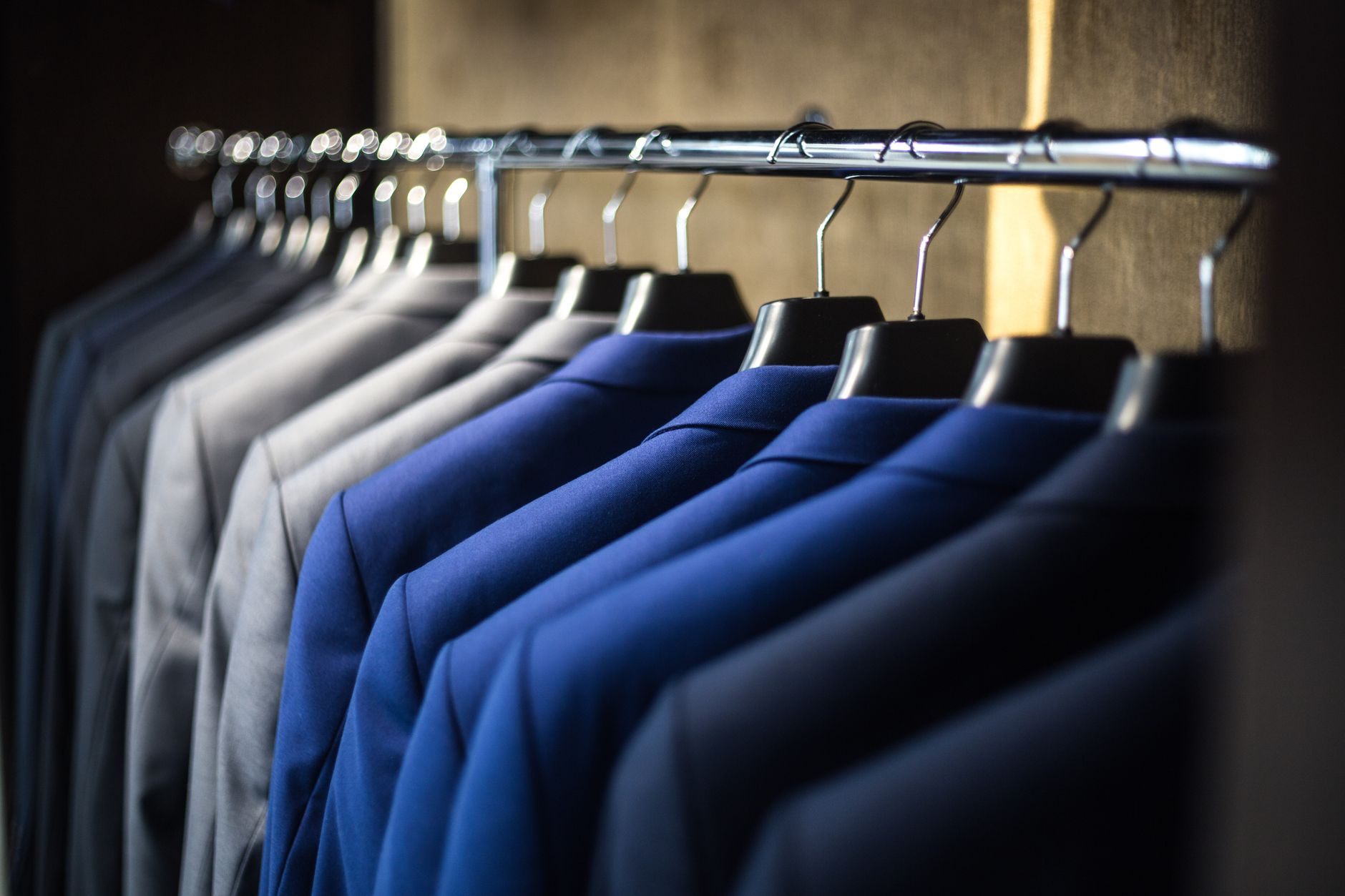
It is no surprise that as a rule-loving group, lawyers are keen on fashion “dos and don’ts.” A customary dark suit with a crisp white shirt and tie is not necessarily en vogue, but it serves legal professionalism standards by exuding credibility and competence.1 The law “suit” and other legal dress standards, however, have a complex history and continue to raise questions about bias in the legal workforce.
Historical Roots of American Legal Fashion
Before the American legal system emancipated itself from British control, English courtrooms enforced strict courtroom dress codes, requiring attorneys to wear wigs, gowns, wing-collars, and bands and collarettes.2
After gaining independence, American jurisdictions shed the relics of English court dress.3 Conveniently, American independence coincided with powdered wigs going passé, providing an easy excuse to abandon courtroom wigs.4 Some early Supreme Court justices appeared in English-inspired silk black robes with red and white detailing popularized by Chief Justice John Jay.5 Folklore tells the tale of Chief Justice John Marshall, who wore plain black robes to symbolize disapproval of his aristocratic predecessors’ audacious court regalia.6
Early lawyers floundered to establish a dress code in early independent American without the confines of their English predecessors.7 In the nineteenth century wealthier attorneys wore traditional, clean, tailored, and “gentlemanly” garments while attorneys of lesser means made do with what they could afford, exemplifying their respective socioeconomic camps.8 The Supreme Court historically required attorneys to wear “morning dress,” a dress code which solicitor generals still abide by in modern Supreme Court appearances.9
Following the Civil War and into the twentieth century, the legal practice diversified as immigrants, African Americans, and women entered the practice.10 The standards of professional attire expanded with the greater inclusion, though certain firms, law schools, and attorneys continued to associate pedigree with court dress.11
Current Expectations for Attorney Attire
Attorneys customarily accept that wearing dark suits and basic accessories as professional.12 From court-imposed rules to case law, the specific rules governing a lawyer’s dress code vary significantly.
The Minnesota General Rules of Practice, for example, only require that lawyers “shall appear in court in appropriate courtroom attire,”13 while the United States Supreme Court requires attorneys to wear “conservative business dress in traditional dark colors (e.g., navy blue or charcoal gray).”14
Other jurisdictions enforce stricter attorney dress codes, including blazers or suit jackets, collared shirts, closed-toed dress shoes, and gender-specific pant options with length requirements.15 Some may prohibit tops displaying midriff, shorts, shoulder-showing shirts, headwear with no religious significance, bare feet, short dresses/skirts, etc.16
A court’s inherent authority to control courtroom conduct has been tested several times, as judges try to regulate attorney attire. For instance, when an attorney appeared before a Florida circuit court wearing a “sport shirt” and gold necklace with a pendant “the size of a silver dollar,” the judge ordered him to wear a tie in a decision that the state’s appellate court later affirmed.17 The New Jersey Superior Court overruled a lower court for holding attorney Patricia De Carlo in contempt twice for wearing sweaters and slacks to court; the Superior Court ruled that if clothing was not disruptive, distractive, or depreciative of the judicial process, it was acceptable.18
Legal Inclusivity and Attire
Formal business attire conveys competence and professionalism which can create lasting impressions on jurors or judges.19 For underrepresented attorneys, the expectations surrounding professional legal appearance may create further disenfranchisement within the legal community.20
Female attorneys may struggle to reconcile professional dress with the routine sexualization they are subjected to by judicial criticism or jury perceptions.21 In male-dominated fields like law, a woman’s “sex appeal” contributes to the perception that they are less competent, intelligent, and rational than their male collogues.22 Many female attorneys feel confined to an unspoken courtroom dress code specific to womenswear, but absent from menswear; the form-fittingness of clothing, cleavage-revealing tops, maternity wear, hair styles, nail polish colors, and skirt length are specific to feminine dress and put female attorneys under heightened scrutiny.23
Gender-normative professional attire contributes to the discrimination of non-binary or gender non-conforming attorneys.24 When professional attire is impossibly non-neutral, some LGBTQ+ attorneys may worry about how they are perceived by others or feel pressured to dress antithetically to their gender identity.25
Attorneys of color, especially Black women, encounter professionalism standards rooted in whiteness.26 Black attorneys may prefer hairstyles suited to different hair texture, such as braids, locs, or afros, all of which are criticized under courtroom “grooming” standards which are largely geared toward white individuals.27
Despite Civil Rights Act prohibitions on discrimination based on religion, religiously observant attorneys may feel pressured to either assimilate to traditional legal attire or present their identities comfortably.28 Across jurisdictions, lower courts are consistently admonished for restricting religious garb like yarmulkes, prayer caps, or clerical attire in the courtroom.29 Hijabi women report experiences of being mistaken for translators or administrative staff while in court, despite being an attorney prepared to argue before the bench.30
Fashion norms communicate important messages about legal tradition, and decorum. From plain black judicial robes to tacky jewelry, legal clothing can challenge standards in an otherwise static environment. Some challenges, however, may be necessary to embrace diverse identities and appearance standards in American courts and law firms.
* Eleanor Chalstrom, J.D. Candidate, University of St. Thomas School of Law Class of 2028 (Associate Editor)
- Adrian Furnham, Pui Shuen Chan & Emma Wilson, What to Wear? The Influence of Attire on the Perceived Professionalism of Dentists and Lawyers, 43 J. Applied Soc. Psych. 1838, 1839 (2014). ↩︎
- See Shaeda Isani, Semiotic Dialectics of Legal Courtroom Attire and the Cross-Cultural Erosion of Professional Identity, 7 ESP Across Cultures 89, 92 (2010) (discussing codified dress codes by the Judges’ Rules of 1625); Bar Council: Court Dress Guidance, The Bar Council (July 2025), https://www.barcouncilethics.co.uk/wp-content/uploads/2017/10/Bar-Council_Court-Dress-Guide_Final_July-2025.pdf [https://perma.cc/4TE6-DNUJ]. ↩︎
- M.H. Hoeflich, Dressing for Success: Lawyers & Clothing in Nineteenth Century America, 69 U. Kan. L. Rev. 527, 529 (2021). ↩︎
- Matthew Hofstedt, The Switch to Black: Revisiting Early Supreme Court Robes, 46 J. Sup. Ct. Hist. 13, 22 (2021). ↩︎
- The Court and Its Traditions, The Supreme Court of the United States, https://www.supremecourt.gov/about/traditions.aspx [https://perma.cc/WN65-255A] (last visited Oct. 14, 2026); John Jay’s robe, Smithsonian, https://www.si.edu/object/john-jays-robe%3Anmah_1200990 [https://perma.cc/5E5N-PM5C] (last visited Oct. 14, 2026). ↩︎
- Kevin C. Walsh, John Marshall’s Judicial Robe: Witness to Constitutional History, 107 Judicature 70, 70 (2023). ↩︎
- Hoeflich, supra note 3, at 529. ↩︎
- See id. at 530–35 (discussing the differences in professional dress standards for coastal and frontier attorneys in the 19th century). ↩︎
- Morning dress, Merriam-Webster, https://www.merriam-webster.com/dictionary/morning%20dress [https://perma.cc/G3ZA-XNUF] (last visited Oct. 14, 2023); Aleksandar Cvetkovic, For Summer Events, Don’t Be Daunted by Morning Dress, Fin. Times (July 17, 2023), https://www.ft.com/content/cc8eccfb-92c9-4ecc-9309-21ea90bac2ab [https://perma.cc/2U2E-ZCEK]; Lisa Tucker, “CVSG”s in plain English, SCOTUSblog (Feb. 10, 2010), https://www.scotusblog.com/2010/02/last-week-in-plain-english-2/ [https://perma.cc/C95C-YCLS]; Debra Cassens Weiss, SG Dumped Traditional Morning Coat, Wore Pantsuit of Unknown Design, A.B.A. J. (Sept. 11, 2009, at 12:39 CDT), https://www.abajournal.com/news/article/sg_dumped_traditional_morning_coat_for_first_high_court_appearance [https://perma.cc/TV2G-82FT]. ↩︎
- Hoeflich, supra note 3, at 536–38. ↩︎
- Hoeflich, supra note 3, at 536–38. ↩︎
- See generally A.B.A. L. Student Podcast, Courtroom Appropriate Fashion Tips for New Attorneys, A.B.A. (Aug. 29, 2016), https://www.americanbar.org/groups/law_students/resources/podcast/courtroom-appropriate-fashion-tips-for-new-attorneys/ [https://perma.cc/5ZZK-UJ7C] (discussing essential closet staples for attorneys like navy or black suits, clean undershirts, and understated jewelry). ↩︎
- Minn. Gen. R. Prac. 2.03(e). ↩︎
- Clerk of the Court, Guide for Counsel in Cases to Be Argued Before the Supreme Court of the United States,
Sup. Ct. of the U.S. 3, 5 (Oct. 2024), https://www.supremecourt.gov/casehand/Guide%20for%20Counsel%202024.pdf [https://perma.cc/62BS-GB64]. ↩︎ - 400th (Tex.) Dist. Ct. Loc. R. I (Fort Bend County); Okla. Stat Ann. 24th Jud. Dist. Loc. Ct. R. 1.18 (West 2009); Cal. Super. Ct. Nev. County, Local Rules, rule 1.10; Wis. Stat. Ann., Wis. Loc. Ct. Rules, Milwaukee Cty. Circ. Ct. R. 1.23 (West 2019); Mo. Ann. Stat., Tenth Jud. Cir. Ct. R. 9.4 (West 2026). ↩︎
- N.M. Dist. Ct. Loc. R. 11-120. ↩︎
- Sandstrom v. State of Florida, 309 So.2d 17, 23 (Fla. Dist. Ct. App. 1975). ↩︎
- In re De Carlo, 357 A.2d 273, 275 (N.J. Super. Ct. App. Div. 1976). ↩︎
- Furnham et al, supra note 1, at 1839; Maureen A. Howard, Beyond a Reasonable Doubt: One Size Does Not Fit All When It Comes to Courtroom Attire for Women, 45 Gonz. L. Rev. 209, 211 (2009). ↩︎
- Elizabeth B. Cooper, The Appearance of Professionalism, 71 Fla. L. Rev. 1, 3–5 (2019). ↩︎
- See generally Kathleen A. Bergin, Sexualized Advocacy: The Ascendant Backlash Against Female Lawyers, 18 Yale J.L. & Feminism 191, 193 (2006) (explaining female sex appeal as a legal trope and potential trial tool). ↩︎
- Id. at 214; Profile of the Legal Profession 2024: Demographics, A.B.A., https://www.americanbar.org/news/profile-legal-profession/demographics/ [https://perma.cc/4442-CCL7] (last visited Oct. 20, 2026). ↩︎
- Yoonji Han, From ‘Vanilla’ Skits Suits to ‘Too-Tight’ Shirts: Female Lawyers Describe How It’s Impossible to Win When It Comes to Professional Dress Codes, Bus. Insider (June 22, 2021, at 11:19 CT), https://www.businessinsider.com/female-lawyers-dress-codes-law-firm-court-discrimination-sexism-2021-6 [https://perma.cc/SZ3E-FR6C]. ↩︎
- Creating More Welcoming Workplaces, The Harvard L. Sch. LGBTQ+ Advoc. Clinic & Beyond Binary Legal 1, 17. https://static1.squarespace.com/static/5e5821d555aa43474493b45d/t/6a3efe7c180a4b537a6ffeef/1782513294995/nonbinaryguide.pdf [https://perma.cc/DD3W-856J] (last visited Oct. 23, 2026). ↩︎
- Id. ↩︎
- Shannon Cumberbatch, When Your Identity Is Inherently “Unprofessional”: Navigating Rules of Professional Appearance Rooted in Cisheteronormative Whiteness as Black Women and Gender Non-Conforming Professionals, 34 J.C.R. & Econ. Dev. 81, 101–02 (2021). ↩︎
- Id. at 105–06. ↩︎
- Cooper, supra note 20, at 13; Civil Rights Act of 1964, 42 U.S.C. § 2000e. ↩︎
- See generally Samuel J. Levine, Religious Symbols and Religious Garb in the Courtroom: Personal Values and Public Judgments, 66 Fordham L. Rev. 1505, 1505–15 (1998) (discussing various court decisions regarding religious garb of attorneys, jurors, and parties in the courtroom). ↩︎
- Amina Saeed, Diverse Experiences: Covery my hair, not my mind: A Muslim woman’s perspective, The Challenge (Illinois State Bar Association), Mar. 2008, at 2. ↩︎
Leave a Reply